

 en
en 简体中文
简体中文 English


Content
- 1 Where Hairbrush Factories Are Concentrated and Why
- 2 How a Hairbrush Factory Produces a Finished Brush
- 3 Hairbrush Materials: What Factories Use and What It Means for Quality
- 4 MOQ, Lead Times, and Pricing: What to Realistically Expect
- 5 How to Evaluate a Hairbrush Factory Before Placing an Order
- 6 Private Label and Custom Development: What Factories Can Actually Do
A professional hairbrush factory is not simply a facility that assembles bristles into handles. It is a vertically integrated manufacturing operation that controls material sourcing, injection molding or woodworking, bristle setting, quality inspection, and packaging — often under one roof. The factory you choose directly determines the quality, consistency, and cost structure of every hairbrush that reaches your customer.
Whether you are a brand looking to develop a private-label hairbrush line, a retailer placing bulk orders, or a buyer evaluating overseas manufacturing for the first time, understanding how hairbrush factories operate gives you a significant advantage in negotiating, sampling, and quality control. This guide covers the full picture — from production processes and materials to MOQ expectations and factory evaluation criteria.
Where Hairbrush Factories Are Concentrated and Why
The global hairbrush manufacturing industry is heavily concentrated in a small number of regions, each with established supply chains for raw materials, tooling, and export logistics.
China accounts for the majority of global hairbrush production, with manufacturing clusters in Guangdong, Zhejiang, and Jiangsu provinces. These regions have dense networks of plastic injection molders, bristle suppliers, handle manufacturers, and packaging producers within close proximity of one another, which keeps component costs and lead times low. Yangjiang in Guangdong, for example, has become particularly known for personal care tool manufacturing including hairbrushes and combs.
Other notable manufacturing regions include:
- India — growing production capacity, competitive labor costs, and a strong domestic market; particularly active in wooden and natural-material brushes
- Taiwan — higher-end manufacturing with tighter quality controls; often used for premium or salon-grade brush lines
- Italy and Germany — specialty artisan production for luxury and professional brush brands; unit costs are significantly higher but craftsmanship and material quality are exceptional
- Vietnam and Bangladesh — emerging manufacturing bases attracting buyers diversifying away from China
For most volume buyers, Chinese factories remain the default starting point due to cost efficiency, production scale, and established export infrastructure. Premium and niche brands increasingly look to European manufacturers or develop hybrid models — Chinese production with European quality oversight.
How a Hairbrush Factory Produces a Finished Brush
Professional hairbrush manufacturing involves several distinct production stages. Each stage has its own quality control checkpoints, and a factory's ability to manage all of them in-house versus outsourcing them significantly affects consistency and lead time.
Stage 1: Handle and Base Production
Plastic handles are produced by injection molding — molten polymer is injected into a steel mold under high pressure and allowed to cool into a precise shape. A single mold can produce hundreds of handles per hour once running. Wooden handles are shaped by CNC machining or lathe turning, then sanded, stained, and lacquered. The handle material determines the brush's weight, feel, durability, and price point.
Stage 2: Cushion or Pad Production (Where Applicable)
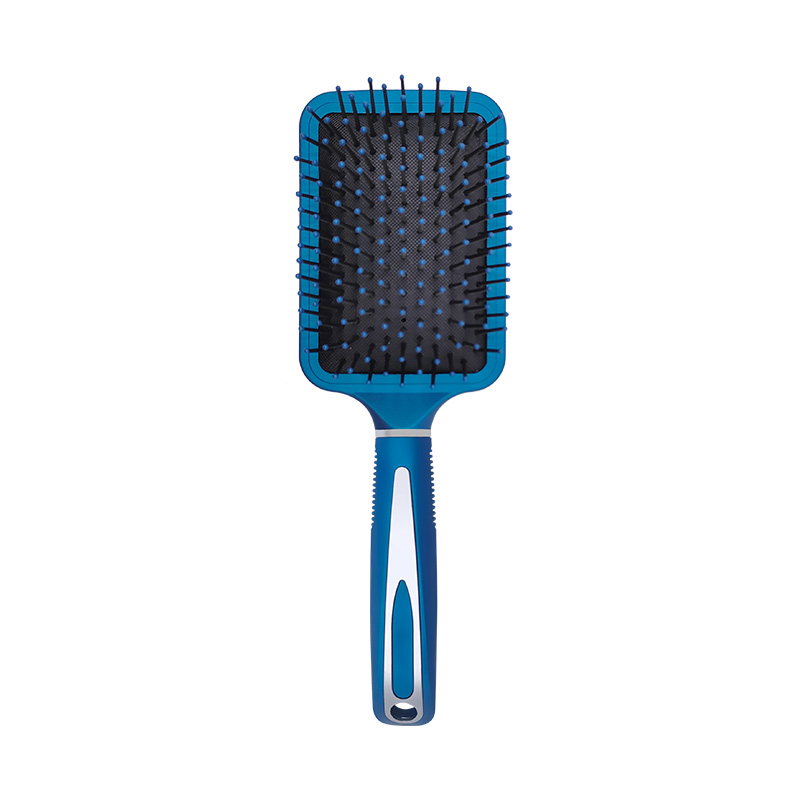
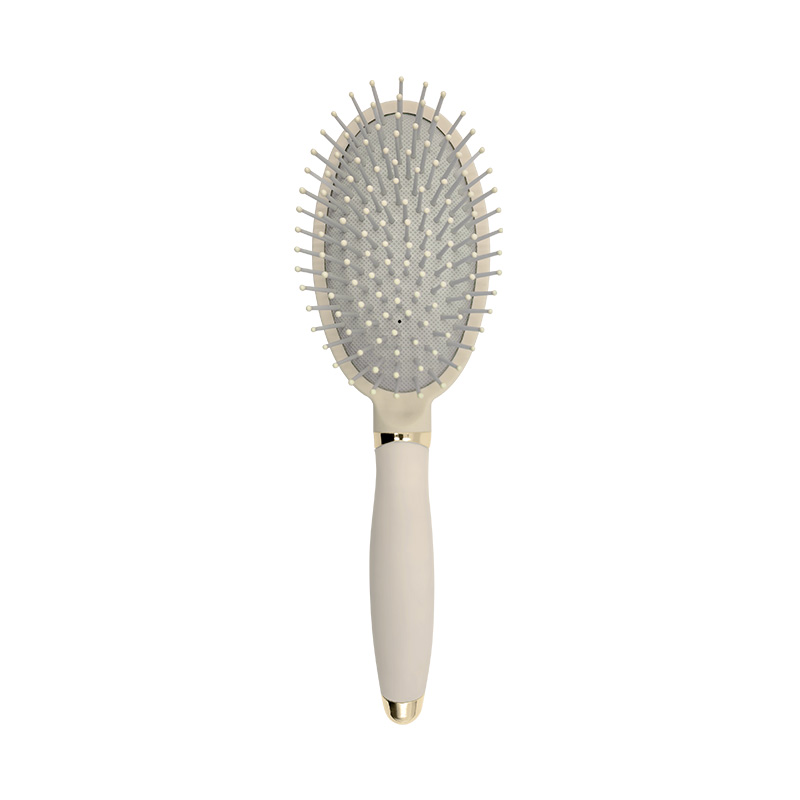
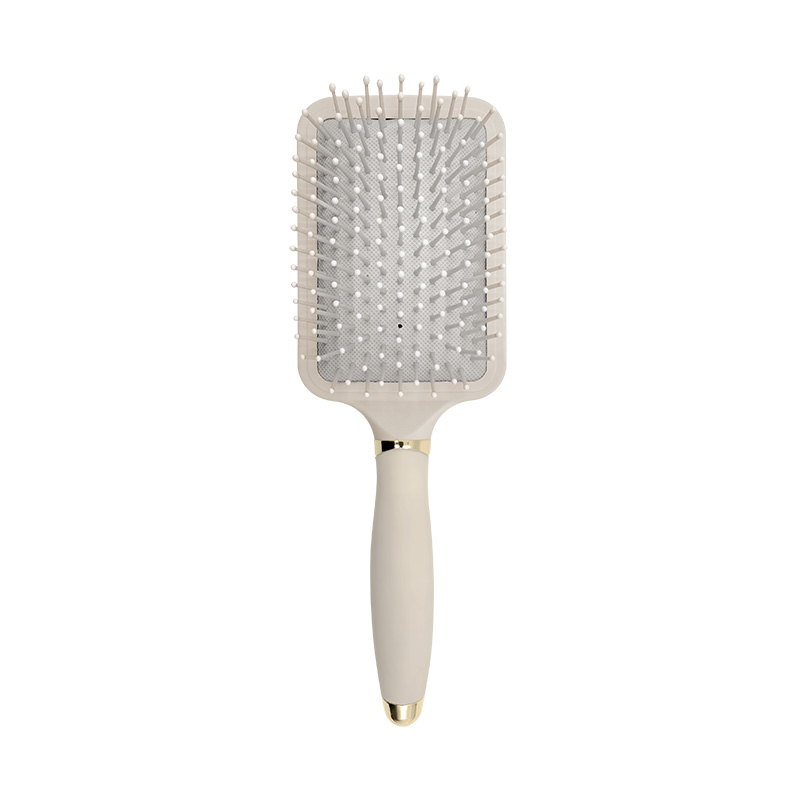
Cushion brushes — the most common type in retail — require a pneumatic rubber or soft PVC pad that sits between the bristle base and the handle. This pad is produced separately, punched to size, and pre-drilled with hole patterns that match the bristle layout. The cushion is what gives the brush its characteristic flexibility and scalp-friendly action.
Stage 3: Bristle Setting
Bristle setting is one of the most labor-intensive steps and a key differentiator between factory tiers. There are two primary methods:
- Staple-setting (anchor setting) — bristle tufts are folded over a small metal staple and punched into pre-drilled holes; fast, cost-effective, and standard for mass-market brushes
- Draw-setting (loop setting) — bristles are threaded through holes and secured by knotting or heat-fusing at the base; more secure, higher cost, preferred for professional and premium brushes
Bristle density, tuft diameter, and hole pattern spacing are all specified by the buyer or set to factory standard during development. These parameters directly affect how the finished brush performs on different hair types.
Stage 4: Trimming and Finishing
After bristle setting, brushes pass through automated trimming machines that cut all bristles to a uniform height and profile — flat, domed, or tapered depending on the design. This step also removes any loose bristles before the brush reaches final inspection.
Stage 5: Quality Inspection and Packaging
Finished brushes are inspected for bristle loss, handle defects, dimensional accuracy, and appearance before being packed into retail or bulk packaging. Full-service factories can produce custom packaging — blister cards, hang tags, printed boxes, or retail-ready display units — as part of the same production run.
Hairbrush Materials: What Factories Use and What It Means for Quality
Material selection is the single biggest lever a buyer has in determining quality and price at the factory level. The following table covers the most common materials used in each part of a production hairbrush:
| Component | Material Options | Quality/Price Level | Key Consideration |
|---|---|---|---|
| Handle | ABS plastic | Entry to mid-range | Lightweight, easy to mold, accepts color well |
| Handle | PP + TPR overmold | Mid-range | Soft-grip feel, ergonomic; two-shot molding adds cost |
| Handle | Bamboo or beechwood | Mid to premium | Natural appeal, heavier, requires more processing |
| Cushion pad | Natural rubber | Premium | Superior flexibility; may not suit latex-sensitive users |
| Cushion pad | Soft PVC | Entry to mid-range | Cost-effective, consistent; less flexible than rubber |
| Bristles | Nylon (PA6 or PA66) | Entry to mid-range | Durable, widely available, tip quality varies by grade |
| Bristles | Boar bristle (natural) | Premium | Distributes scalp oils, gentle on hair; higher cost and sourcing complexity |
| Bristles | Mixed boar and nylon | Mid to premium | Balance of detangling and conditioning; popular in salon brushes |
Bristle tip quality is particularly important and often overlooked in factory sourcing. Ball-tipped or rounded nylon bristles require an additional ball-tip molding or heat-balling process — factories that skip this step produce brushes with sharp bristle ends that scratch the scalp. Always request a sample and run your fingers firmly across the bristle tips before approving production.
MOQ, Lead Times, and Pricing: What to Realistically Expect
Understanding factory minimums and timelines before approaching suppliers avoids wasted time on both sides and prevents misaligned expectations during negotiation.
Minimum Order Quantities
Standard hairbrush factory MOQs range from 500 to 5,000 units per style for existing molds and standard configurations. Custom designs — new handle shapes, unique cushion layouts, or proprietary bristle arrangements — require new tooling, which raises MOQs to 2,000–10,000 units to justify the mold investment (typically $800–$5,000 per mold depending on complexity).
Some factories offer lower-MOQ programs (100–500 units) for buyers willing to use existing molds with custom color or packaging changes only. This is a practical route for brands testing a new SKU before committing to full tooling investment.
Production Lead Times
- Samples from existing molds — 7 to 14 days after order confirmation and material availability
- Custom samples with new tooling — 25 to 45 days including mold fabrication and first sample production
- Mass production (standard orders) — 30 to 60 days after sample approval and deposit payment
- Peak season delays — Chinese New Year (January–February) and Golden Week (October) create 2–4 week production delays; factor this into annual planning
Factory Pricing Structure
Ex-factory (EXW) unit prices from Chinese hairbrush factories typically fall in the following ranges depending on specification:
- Basic plastic cushion brush, nylon bristles — $0.80 to $2.50 per unit at 2,000+ pieces
- Mid-range brush with TPR handle and mixed bristles — $2.50 to $6.00 per unit
- Premium boar bristle brush with wooden handle — $6.00 to $18.00 per unit depending on boar bristle grade and wood species
These figures do not include freight, import duties, or packaging costs. Retail or salon brushes sourced at $3–$6 EXW typically land at 3x to 5x the factory price after logistics, duties, and margin are applied.
How to Evaluate a Hairbrush Factory Before Placing an Order
The difference between a reliable factory partner and a disappointing one rarely becomes apparent until after production begins. These are the evaluation criteria that experienced buyers use to assess factories before committing:
- In-house production capability — ask specifically which processes are done in-house versus subcontracted. A factory that outsources injection molding, bristle setting, or packaging has less control over quality and lead times than one that manages all stages internally.
- Certifications relevant to your market — for Europe, confirm REACH compliance on all materials; for the US, ask about CPSC compliance and whether they can provide material safety data sheets (MSDS) for all components. Factories supplying to recognized retail chains will typically have ISO 9001 certification as a baseline.
- Sample quality versus production quality — request a production sample, not a handmade prototype. Some factories produce exceptional samples by hand that are then impossible to replicate at machine speed. A production sample from the actual tooling and production line is the only reliable indicator of mass-production quality.
- Client references and export markets — ask which countries the factory currently exports to and whether they can name current or past clients (even by brand tier rather than name). A factory exporting to EU or US retail chains operates to a higher baseline standard than one that primarily supplies domestic wholesale.
- Communication responsiveness — a factory that takes three days to answer a pre-order inquiry will not become faster once production is running. Response time and clarity during the evaluation phase is a reliable proxy for how production issues will be handled later.
Private Label and Custom Development: What Factories Can Actually Do
Most established hairbrush factories offer three levels of customization, each with different cost and timeline implications:
Level 1 — Label and Packaging Customization Only
The fastest and lowest-cost route to a private label product. The factory's existing brush design is used with your brand name, logo, and custom packaging. No new tooling is required. Suitable for brands entering the market quickly or testing a category before investing in product development.
Level 2 — Color, Material, and Component Customization
Using existing molds but specifying custom colors, bristle materials, cushion type, or hardware (such as handle end caps or logo pins). This level allows meaningful product differentiation without full custom tooling cost. Lead times are only slightly longer than standard production.
Level 3 — Full Custom Design
A completely original brush design with custom-built molds for the handle, base, and any unique components. This route produces a product that cannot be easily replicated by competitors using the same factory's catalog. It requires 3D design files or detailed engineering drawings, a tooling investment of $1,500–$8,000+ depending on complexity, and a longer development cycle of 60–90 days from design approval to production sample. The result is a fully proprietary product matched to your brand's exact specification.