

 en
en 简体中文
简体中文 English


Content
- 1 Hairbrushes vs. Combs: Which One Do You Actually Need?
- 2 Types of Hairbrushes and What Each One Is For
- 3 Types of Combs and When to Use Each
- 4 Hairbrush and Comb Material: How It Affects Hair Health
- 5 Choosing the Right Hairbrush or Comb for Your Hair Type
- 6 The Correct Way to Brush and Comb Hair to Minimize Breakage
- 7 How to Clean Hairbrushes and Combs — and How Often
- 8 What to Look for When Buying Quality Hairbrushes and Combs
Hairbrushes vs. Combs: Which One Do You Actually Need?
The short answer: most people need both — but for different jobs. Hairbrushes are designed for smoothing, styling, adding volume, and distributing natural scalp oils through the hair shaft. Combs are designed for detangling, sectioning, precision parting, and working through wet hair without causing breakage. Using a brush on soaking-wet hair, for example, can increase breakage by up to 3× compared to using a wide-tooth comb, according to hair fiber research published in the Journal of Cosmetic Science.
The right tool depends on three factors: your hair type (fine, thick, curly, coily, straight), your hair's current state (wet, damp, or dry), and your styling goal (smoothing, detangling, volumizing, or defining). This guide breaks down every major type of hairbrush and comb, maps them to specific use cases, and explains what actually separates a quality tool from a cheap one.
Types of Hairbrushes and What Each One Is For
Hairbrushes are not interchangeable. Each design was developed for a specific styling outcome or hair texture. Using the wrong brush type is one of the most common causes of frizz, breakage, and unsatisfying blowouts.
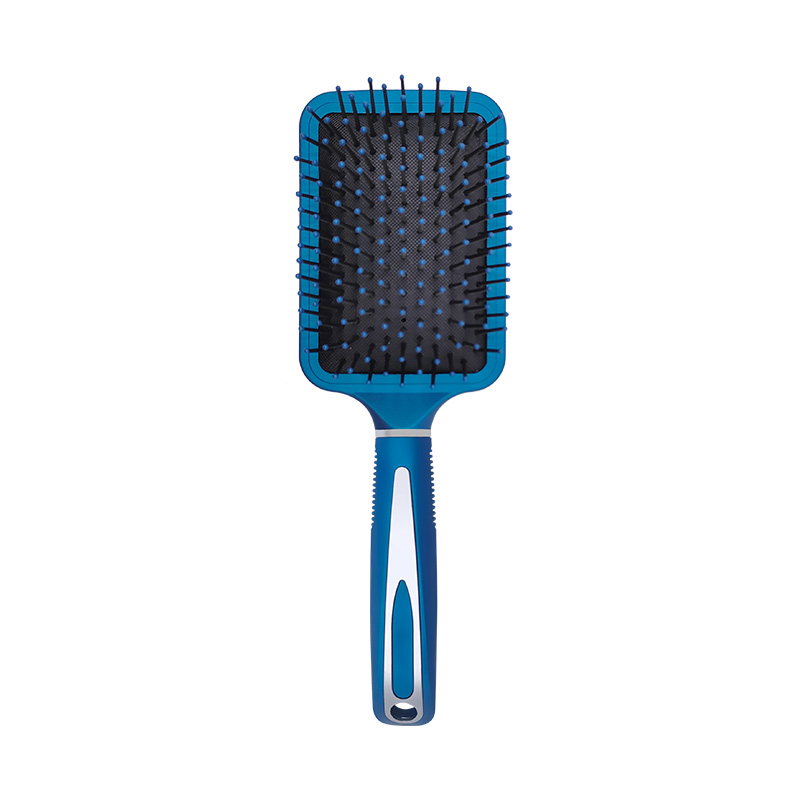
Paddle Brush
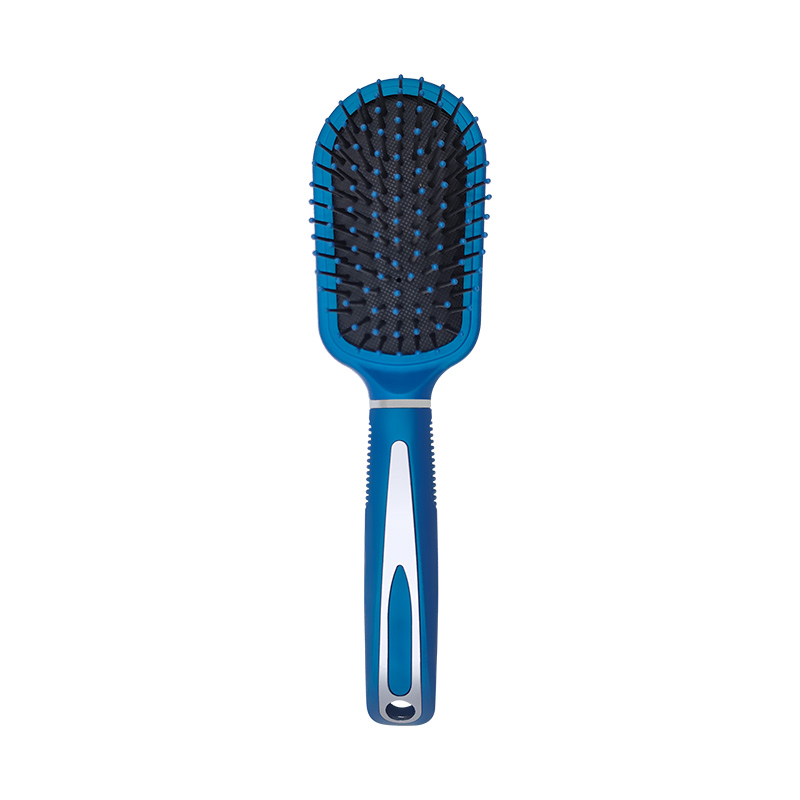
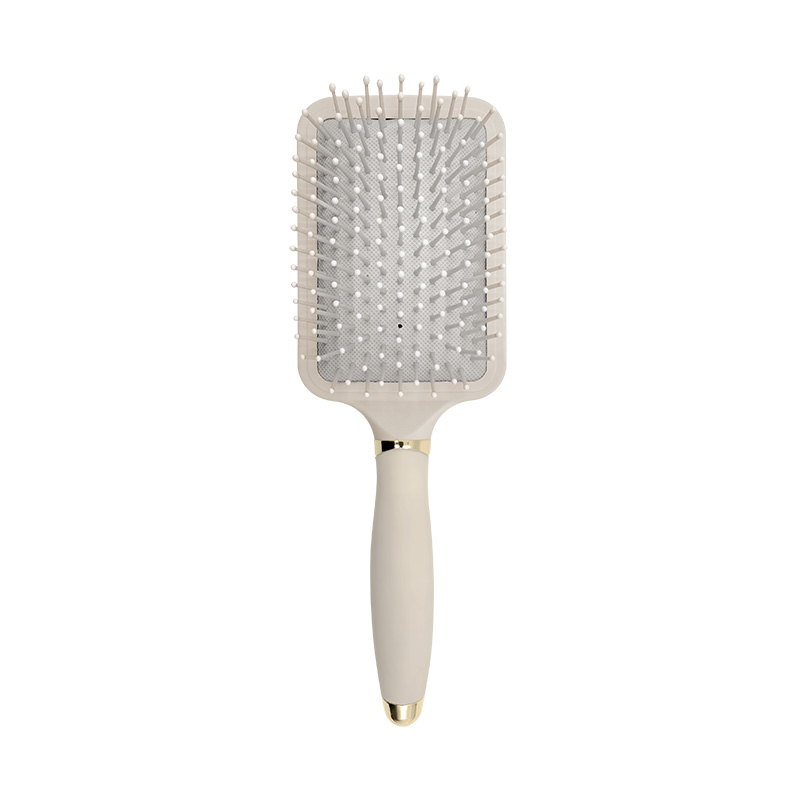
A paddle brush has a large, flat or slightly curved base — typically 3–4 inches wide — making it ideal for smoothing and straightening medium to long hair in fewer strokes. A single pass with a paddle brush covers roughly 3× the surface area of a round brush, making it the fastest tool for smoothing hair before heat styling or for quick everyday detangling of dry, straight to wavy hair. Not recommended for curly hair, as the rigid, wide base disrupts curl pattern.
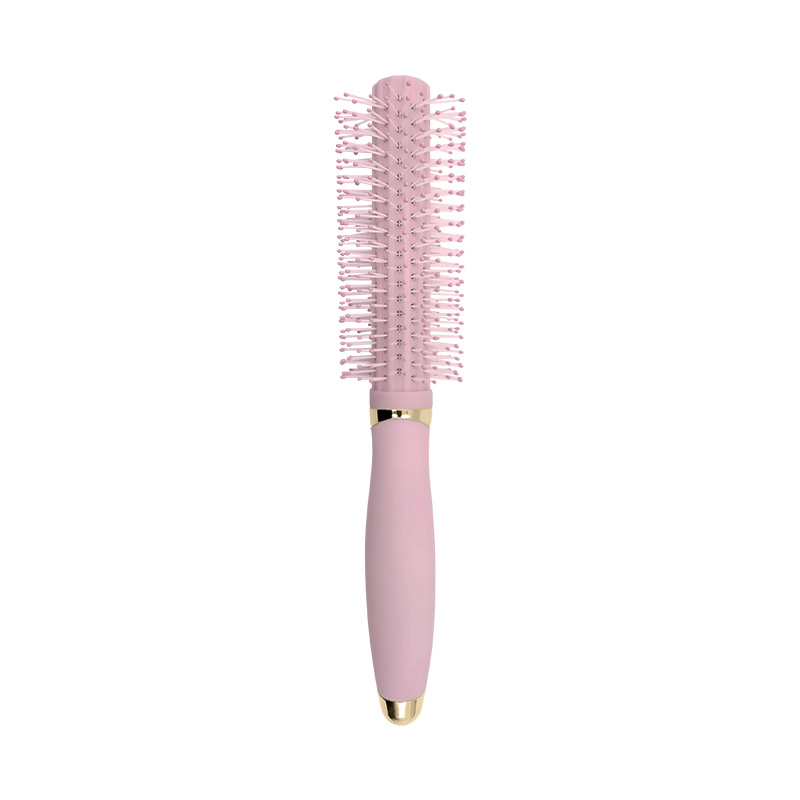
Round Brush
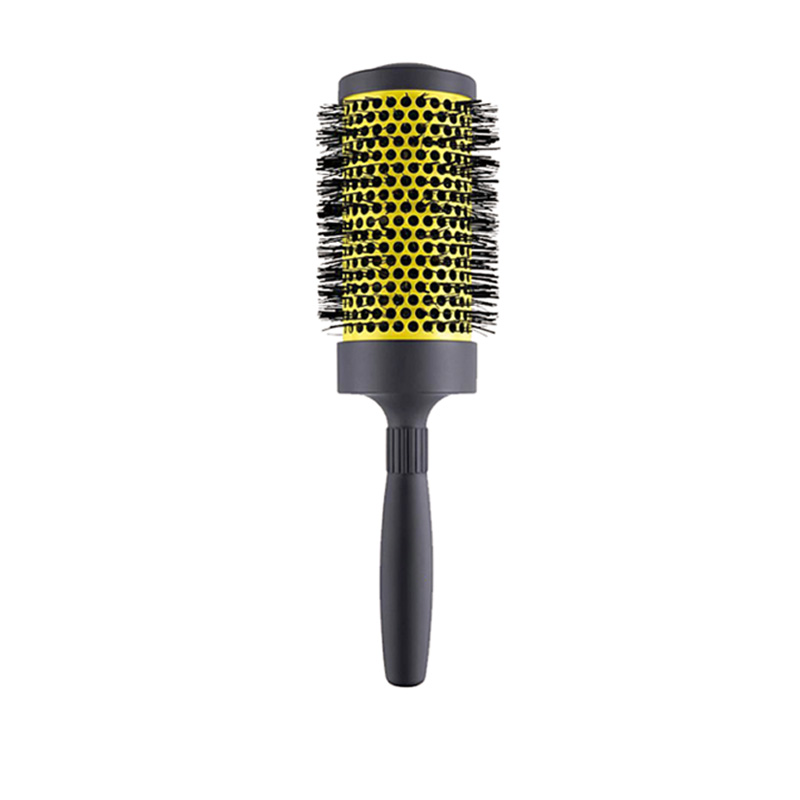
Round brushes are the cornerstone of professional blowouts. The cylindrical barrel shape creates tension and curl when combined with a blow dryer, allowing stylists to add volume at the root, curl at the ends, or smooth the cuticle for shine. Barrel diameter determines the size of the curl: a 1-inch (25mm) barrel creates tight curls, while a 3-inch (75mm) barrel produces gentle waves and volume lift. Ceramic or thermal-coated barrels retain heat and speed up styling; natural bristle versions create more shine with less heat damage.
Boar Bristle Brush
Boar bristle brushes use natural animal bristles — typically from boar hides — that closely resemble the structure of human hair. This similarity allows the bristles to grab and redistribute sebum (natural scalp oil) from the root to the ends, conditioning the hair shaft naturally with each stroke. Regular use of a boar bristle brush — as few as 30–50 strokes per day — can visibly improve hair shine and reduce the need for leave-in conditioner for people with dry or medium hair. Pure boar bristle is best for fine to medium hair; mixed boar-and-nylon bristle versions handle thicker hair more effectively.
Denman Brush
A cult favorite in the curly hair community, the Denman brush features rows of evenly spaced nylon pins set in a rubber cushion base. The design allows it to define and clump curls while detangling, particularly effective on type 3A–4C curl patterns. Many users remove one or more rows of pins to customize the spacing for their specific curl texture. It is used on wet, conditioner-coated hair as part of the "rake and shake" or "praying hands" curl definition methods.
Cushion Brush
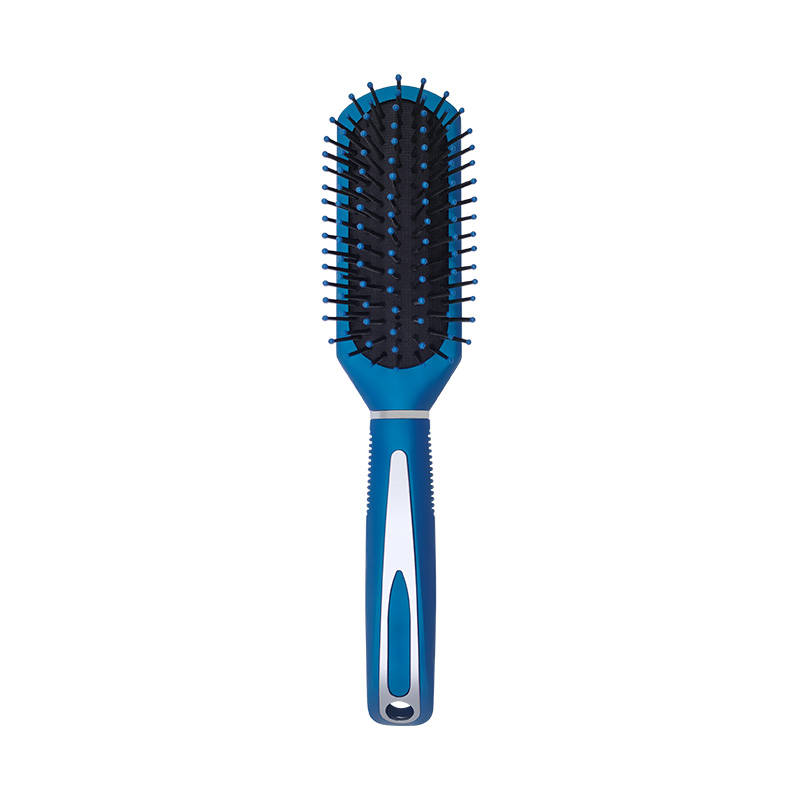
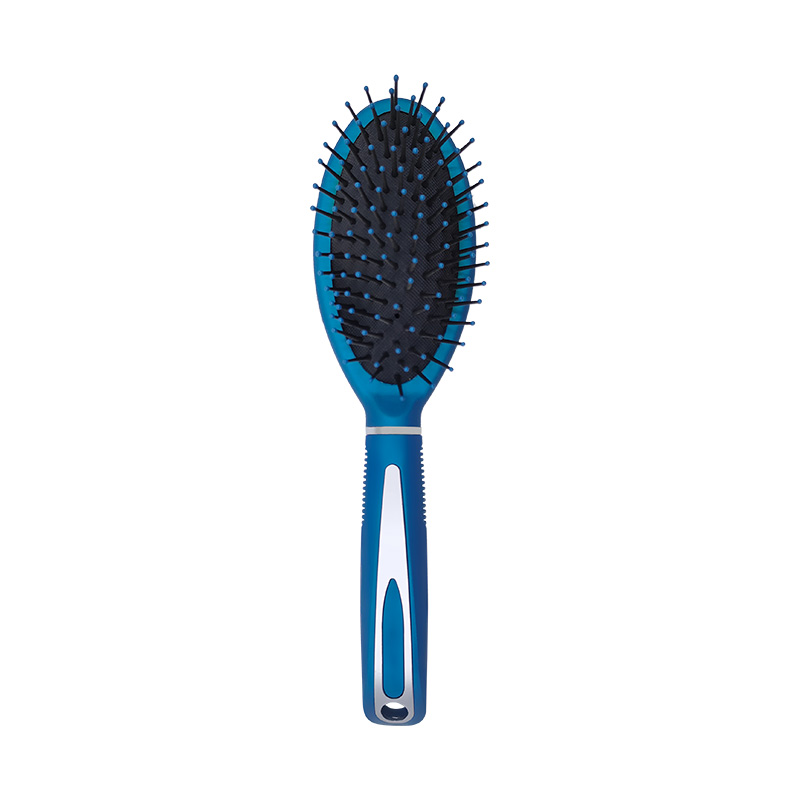
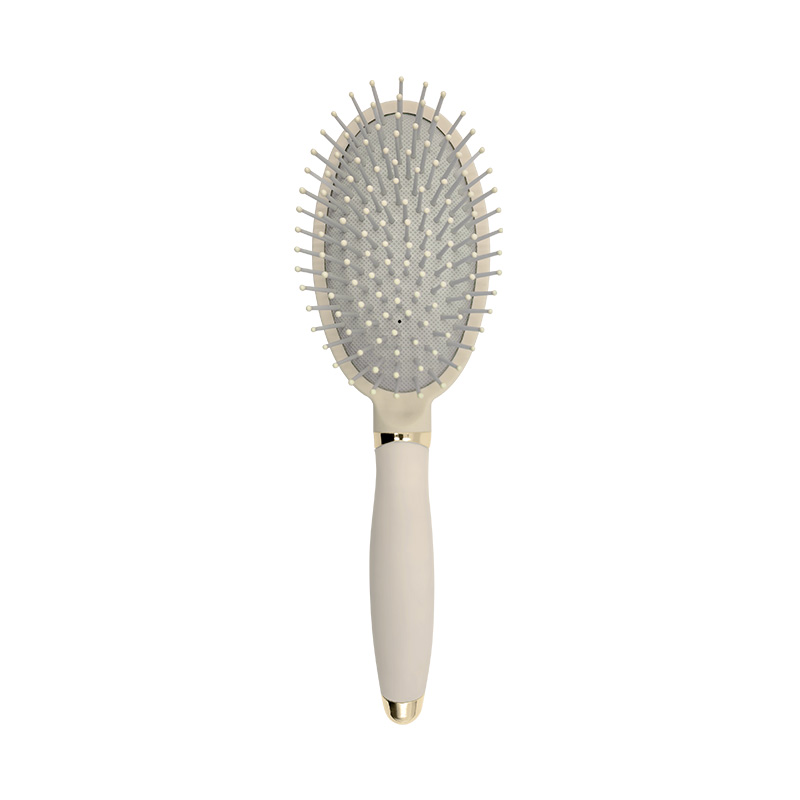
A cushion brush features a pneumatic rubber pad beneath the bristles that flexes with the scalp's contours, reducing scalp pressure and bristle resistance. The flexible cushion absorbs force, making cushion brushes the gentlest option for daily brushing on sensitive scalps or fragile hair. They are the most common everyday brush type found in households globally, priced from $5 for basic versions to $60+ for premium boar bristle cushion models.
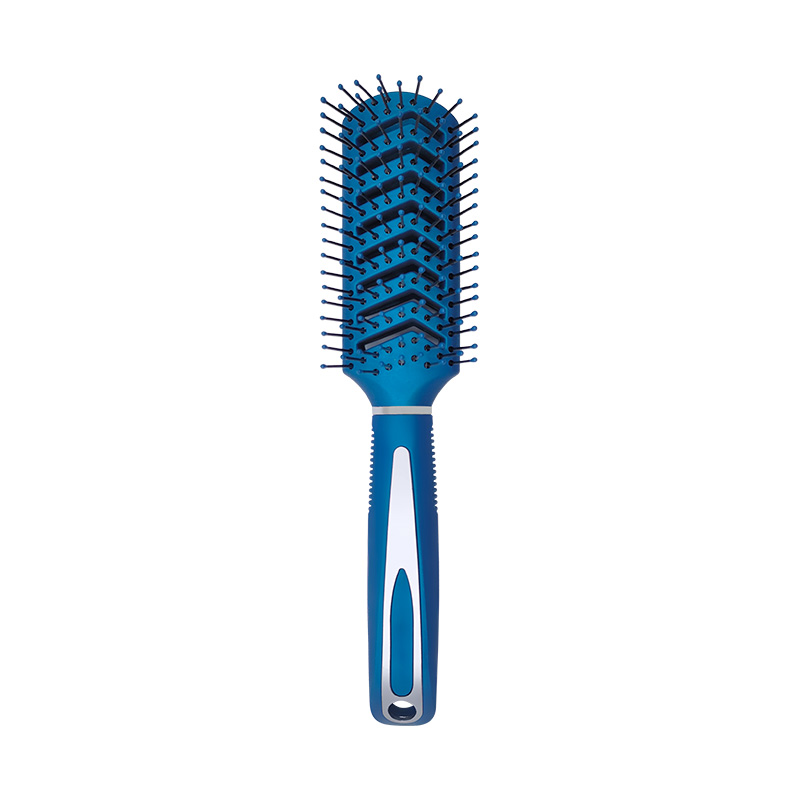
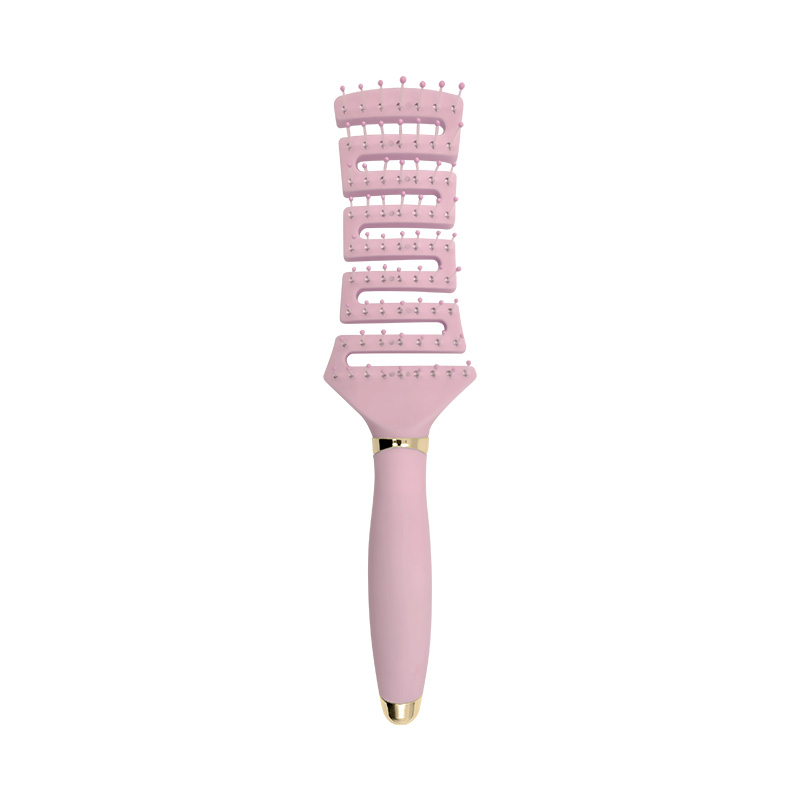
Vent Brush
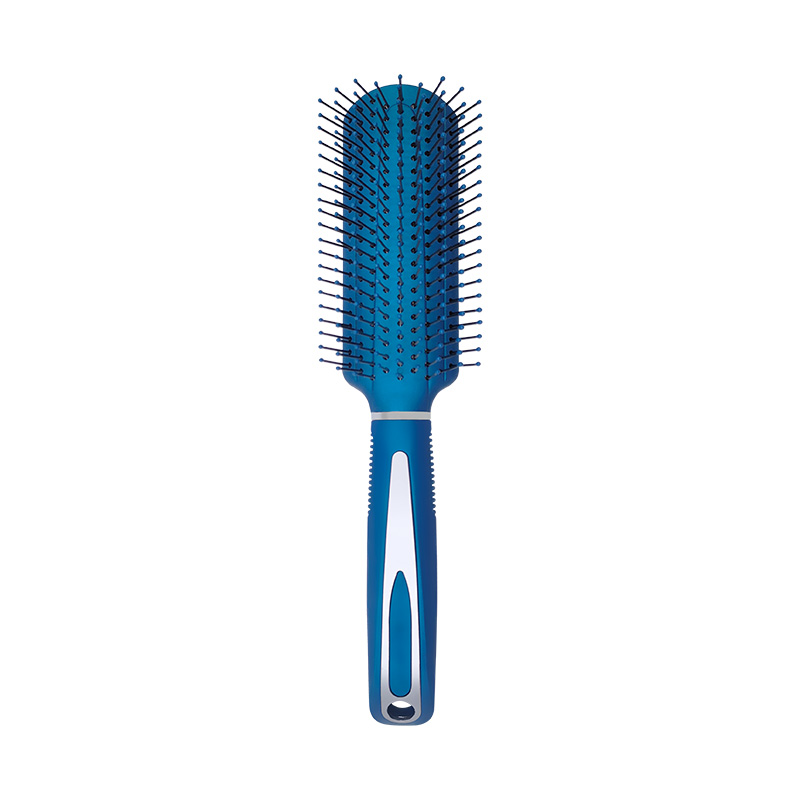
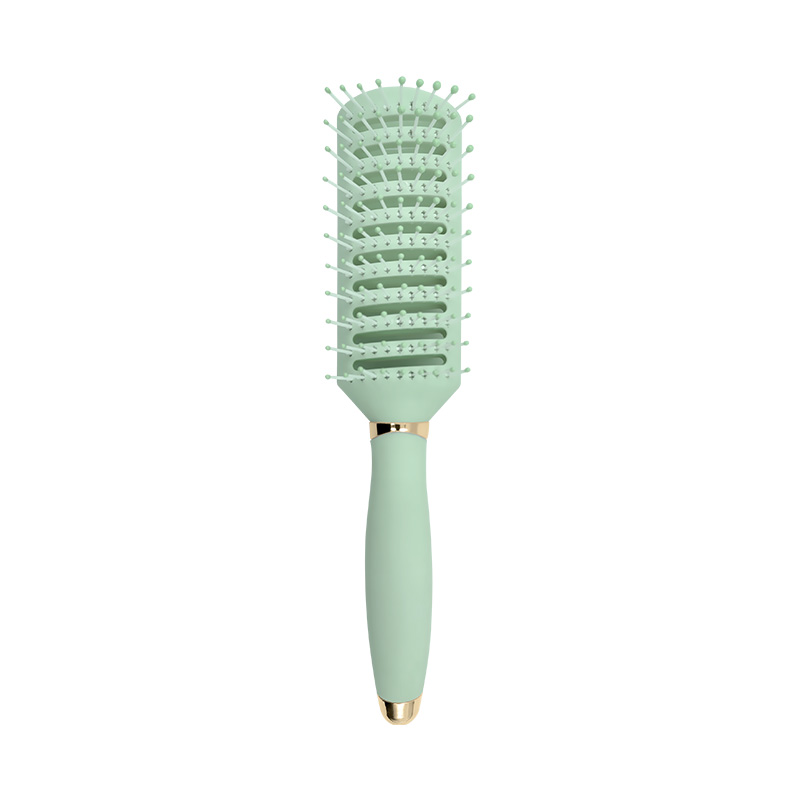
A vent brush has openings (vents) in its base that allow airflow from a blow dryer to pass directly through the brush and reach the hair more efficiently. This speeds up blow-drying time — typically by 20–30% compared to a solid-base brush — while adding volume and reducing heat concentration. Best suited for medium to thick hair being blow-dried for volume rather than precision curl.
Types of Combs and When to Use Each
Combs are precision tools. Where brushes work across a broad surface, combs work tooth-by-tooth through individual strands. This makes them indispensable for certain tasks — and the wrong choice can cause significant breakage if teeth spacing or material is mismatched to the hair type.
Wide-Tooth Comb
The wide-tooth comb is the single most universally recommended tool for detangling wet hair of any texture. With tooth spacing of 6–10mm or more, it glides through knots without catching and tearing hair fibers. It is the gold standard tool for detangling curly, coily, and natural hair because it separates clumps without disrupting curl pattern. It is also the preferred detangling tool for chemically treated, bleached, or otherwise fragile hair where breakage risk is elevated.
Fine-Tooth Comb
With tooth spacing of 1–3mm, fine-tooth combs are designed for precision work on smooth, already-detangled hair. They create sharp, clean parts, smooth flyaways, and are used in finishing styling — running a fine-tooth comb through a blowout adds sleekness and polish. They are also used in professional color application for sectioning and even product distribution. Fine-tooth combs should never be used on wet, tangled, or curly hair — the tight tooth spacing creates excessive friction and can cause significant snapping and breakage.
Rat-Tail Comb
Named for its long, thin pointed handle, the rat-tail comb is a precision styling tool used for creating clean sections, weaving hair for highlights, and creating defined parts for updos, braids, and formal styles. The pointed tail allows millimeter-accurate part placement that no brush or standard comb can replicate. It is a standard tool in every professional salon and an essential for anyone who regularly styles their hair into braids, cornrows, or updo hairstyles.
Teasing Comb (Backcombing Comb)
A teasing comb has alternating long and short teeth — or a fine-tooth section alongside a wider section — designed for backcombing hair at the root to create volume and texture. It is used in updos, vintage blowouts, and editorial styles where root lift and held structure are required. A good teasing comb also typically includes a rat-tail handle for sectioning. Overuse can cause mechanical damage to the hair cuticle, so it is best reserved for occasional styling use rather than daily brushing.
Barber Comb
A barber comb is a professional tool with two sections of different tooth densities — a wide-tooth section for initial combing and a fine section for precision cutting guidance. Made from hard vulcanite rubber or carbon fiber, these combs are heat-resistant and antistatic. While primarily a professional tool, they are excellent for men's short hair grooming at home, offering precise styling control with a single tool.
Hairbrush and Comb Material: How It Affects Hair Health
The material of bristles, teeth, and handles is not merely an aesthetic choice — it directly affects static electricity, heat transfer, breakage risk, and how the tool interacts with the hair cuticle.
| Material | Static Generation | Gentleness | Best For | Durability |
|---|---|---|---|---|
| Boar Bristle (natural) | Very low | Excellent | Fine to medium, dry hair, shine | Moderate (5–8 years) |
| Nylon / Plastic Pins | High | Moderate | Thick, coarse, or curly hair | High (8–12 years) |
| Mixed Boar + Nylon | Low | Good | Medium to thick hair, all-purpose | High |
| Carbon Fiber (comb) | Very low (antistatic) | Excellent | All hair types, heat styling | Very high (10–15+ years) |
| Vulcanite Rubber (comb) | Low | Very good | Professional styling, all types | Very high |
| Standard Plastic (comb) | High | Moderate | Budget, general use | Low–moderate (2–4 years) |
| Wood (brush handle/comb) | Very low | Good | Eco-conscious users, dry use | Moderate (avoid water) |
Static electricity is a major but underappreciated factor in hair tool selection. Plastic combs and nylon brushes generate significant triboelectric charge that causes hair strands to repel each other, leading to frizz and flyaways — particularly problematic in dry winter air. Switching to a carbon fiber or rubber comb and a boar bristle brush can visibly reduce frizz without any product change.
Choosing the Right Hairbrush or Comb for Your Hair Type
Hair type is the primary selector for both brush and comb choice. Using tools designed for different textures than your own is the most common reason people experience unnecessary damage or unsatisfying results.
Fine and Thin Hair
Fine hair is most vulnerable to mechanical damage — individual strands have a smaller diameter (typically 50–70 µm vs. 80–100 µm for thick hair) and break more easily under tension. The best tools for fine hair are a pure boar bristle cushion brush for dry styling and a wide-tooth comb for wet detangling. Avoid brushes with hard ball-tipped nylon pins, which can snag and snap fine strands. A paddle brush with soft mixed bristles works well for smoothing without adding breakage risk.
Thick and Coarse Hair
Thick hair requires brushes and combs with sufficient stiffness to penetrate through dense strands. Pure boar bristle brushes are too soft for thick hair — the bristles bend rather than penetrate, making brushing ineffective. A mixed boar-and-nylon bristle brush or a firm nylon pin brush is the practical choice for thick hair. For combing, a wide-tooth comb with robust, smoothly finished teeth in rubber or carbon fiber is most effective and least damaging.
Curly and Coily Hair (Type 3–4)
Curly and coily hair requires the most careful tool selection. The natural curl pattern means strands are more prone to tangling and breakage, and most brushing should be done on wet, conditioner-coated hair to reduce friction. For type 3 curls, the Denman brush or a wide-tooth comb is the standard recommendation. For type 4 coils, finger detangling followed by a wide-tooth comb with generous conditioner is widely preferred in the natural hair community to minimize breakage. Brushing dry, coily hair with a fine-tooth comb or paddle brush can cause severe mechanical damage and disrupt the curl pattern irreparably until the next wash.
Color-Treated and Chemically Processed Hair
Bleached, permed, and relaxed hair has a compromised cuticle structure, making it significantly more prone to mechanical breakage than virgin hair. The cuticle scales are more raised and jagged, which increases friction during combing. Always use a wide-tooth comb on wet, conditioned chemically treated hair, starting from the ends and working upward toward the root — a technique that reduces breakage by 40–60% compared to combing root-to-end according to hair fiber mechanics research. Avoid plastic combs with seam lines on the teeth, which catch and snap fragile strands.
Straight and Wavy Hair
Straight and wavy hair types have the widest tool compatibility. A boar bristle paddle brush for dry smoothing, a cushion brush for everyday use, and a wide-tooth comb for wet detangling covers most needs effectively. Round brushes add versatility for styling — a 2-inch (50mm) barrel round brush creates the classic blowout wave on shoulder-length straight or wavy hair.
The Correct Way to Brush and Comb Hair to Minimize Breakage
Even the best hairbrushes and combs cause damage when used incorrectly. Technique matters as much as tool selection — and a few simple adjustments can dramatically reduce daily hair loss and breakage.
- Never brush wet hair with a paddle brush or round brush. Wet hair is 3× weaker than dry hair due to the swollen, softened cortex. Use a wide-tooth comb or a brush specifically designed for wet use (look for "wet brush" or "detangling brush" designations).
- Start from the ends, not the roots. Beginning at the ends and working upward in sections allows knots to be resolved gradually rather than forcing them down the full length of the hair shaft, which increases breakage. This technique applies to both brushing and combing.
- Use one hand to hold hair above the section you are detangling. This reduces the tension pulling on the root and scalp when encountering knots, significantly lowering the mechanical stress transferred to the hair follicle and root zone.
- Do not overbush. The "100 strokes a day" advice popularized in the early 20th century is now known to cause cumulative mechanical damage. For most hair types, 20–30 strokes of a boar bristle brush for oil distribution is sufficient; additional brushing beyond this point does not add benefit and increases wear on the cuticle.
- Apply a detangling spray or conditioner before combing very tangled hair. Lubrication reduces inter-fiber friction by 30–50%, making knots release with significantly less force and dramatically reducing the snap-and-break cycle that causes split ends.
- Replace brushes and combs on schedule. Worn, bent, or damaged bristles and chipped comb teeth have irregular edges that abrade the cuticle. A quality hairbrush should be replaced every 1–3 years depending on use frequency; a comb every 2–5 years.
How to Clean Hairbrushes and Combs — and How Often
Hairbrushes and combs accumulate hair, product residue, scalp oils, dead skin cells, and — over time — bacteria and fungi if not cleaned regularly. Research has detected Staphylococcus epidermidis, Candida species, and other microorganisms in unwashed hairbrushes used for more than four weeks without cleaning. Beyond hygiene, dirty brushes and combs redeposit product buildup onto clean hair, reducing styling effectiveness.
Cleaning Frequency Guidelines
- Remove trapped hair: After every use. Use a comb or your fingers to pull hair from the brush base. This takes 10–15 seconds and prevents the base from becoming compacted.
- Full wash for brushes: Every 1–2 weeks for daily users; every 2–4 weeks for occasional users.
- Full wash for combs: Every 1–2 weeks. Combs accumulate less residue than brushes but still harbor product and oil buildup between teeth.
How to Clean a Hairbrush
- Remove all loose hair from the bristles using a comb or tail comb handle, working from the outer edge toward the center.
- Fill a bowl with warm (not hot) water and add 1–2 drops of gentle shampoo or dish soap. Hot water can warp plastic bases and loosen the adhesive on cushion pads.
- Swirl the brush in the soapy water for 30–60 seconds. For brushes with a cushion pad, keep the pad as dry as possible — submerging the cushion can cause mold growth inside the air pocket.
- Use an old toothbrush to scrub between the bristles and clean the base pad.
- Rinse thoroughly under running cool water. Shake out excess water and place bristle-side down on a clean towel to dry completely before storage. Never dry a brush bristle-side up — water trapped in the cushion pad can cause the pad to deteriorate and develop mold.
How to Clean a Comb
Most combs — plastic, rubber, and carbon fiber — can be fully submerged. Soak in warm soapy water for 5–10 minutes, scrub between the teeth with a toothbrush, rinse, and air dry. Wooden combs should never be soaked — wipe clean with a damp cloth only and dry immediately to prevent warping and cracking.
What to Look for When Buying Quality Hairbrushes and Combs
The hairbrush and comb market is saturated with products ranging from $2 to $200. Higher price does not always mean better performance, but certain quality indicators do separate functional, hair-safe tools from cheap ones that cause damage.
Quality Indicators for Hairbrushes
- Smooth, rounded bristle tips: Nylon pin brushes should have ball-tipped or rounded ends — not sharp points that scratch the scalp and snag cuticles. Run the bristles along the back of your hand; they should feel smooth, not scratchy.
- Secure bristle setting: Tug a few bristles — they should not pull out easily from the base. Cheap brushes lose bristles within weeks of use; these loose bristles then tangle in the hair and can cause knots.
- Firm but flexible cushion pad: Press the pad — it should compress slightly and spring back. A pad that collapses fully is too soft; one with no give is too rigid for comfortable scalp use.
- Balanced weight and ergonomic handle: A quality brush should feel balanced in the hand, not front-heavy. A comfortable grip reduces wrist fatigue during blow-drying sessions that can last 10–20 minutes.
Quality Indicators for Combs
- Saw-cut vs. injection-molded teeth: High-quality combs are saw-cut from a solid piece of material, creating smooth tooth edges. Injection-molded plastic combs have a visible seam line running along the side of each tooth — this seam acts like a micro-saw, abrading the hair cuticle with every stroke. Run your fingernail along the side of a comb tooth; a quality comb should feel completely smooth.
- Even tooth spacing: Teeth should be uniformly spaced with no variation. Uneven spacing causes inconsistent resistance and snagging.
- Flexibility without brittleness: A good comb should flex slightly under pressure rather than snapping. Overly rigid cheap plastic combs break when dropped and develop sharp edges that immediately damage hair.
For most people, a $25–$40 mixed boar-and-nylon cushion brush paired with a $10–$20 saw-cut rubber or carbon fiber wide-tooth comb covers the vast majority of daily hair care needs — a combined investment of under $60 that, with proper maintenance, should last 5–10 years.