

 en
en 简体中文
简体中文 English


Content
- 1 Why the Type of Hairbrush You Use Matters More Than You Think
- 2 Paddle Brush: The Everyday Essential for Long, Straight Hair
- 3 Round Brush: The Blowout Specialist
- 4 Boar Bristle Brush: The Gold Standard for Shine and Scalp Health
- 5 Detangling Brush: Engineered to Minimize Breakage
- 6 Vent Brush: The Speed-Drying Styling Tool
- 7 Teasing Brush: Adding Volume and Texture at the Root
- 8 Cushion Brush: Daily Use Comfort and Smoothing
- 9 Wide-Tooth Comb and Denman Brush: Curly and Coily Hair Essentials
- 10 Hairbrush Bristle Types Compared: Nylon, Boar, and Mixed
- 11 How to Match Your Hairbrush to Your Hair Type
- 12 How Often to Clean Your Hairbrush — and Why It Matters
The right hairbrush makes a measurable difference in hair health, styling results, and how long your blowout lasts. The most important hairbrush types are paddle brushes, round brushes, boar bristle brushes, detangling brushes, vent brushes, teasing brushes, and wide-tooth combs — each engineered for a specific hair type, texture, or styling purpose. Using the wrong brush is one of the most common causes of breakage, frizz, and scalp irritation.
This guide covers every major hairbrush type, explains exactly what each one does, and tells you precisely who should be using it — so you can build a brush collection that actually works for your hair.
Why the Type of Hairbrush You Use Matters More Than You Think
Hair is structurally vulnerable. A single strand of hair can withstand a tension of roughly 60–100 grams before breaking, and aggressive or incorrect brushing multiplies that stress across hundreds of strands simultaneously. The American Academy of Dermatology notes that excessive or improper brushing is a leading contributor to mechanical hair breakage, particularly in chemically treated or heat-styled hair.
Beyond breakage, brush selection affects scalp stimulation, product distribution, static buildup, curl definition, and blowout longevity. A professional hairstylist typically owns 5 or more different brush types — not because of preference, but because no single brush performs all tasks optimally.
Paddle Brush: The Everyday Essential for Long, Straight Hair
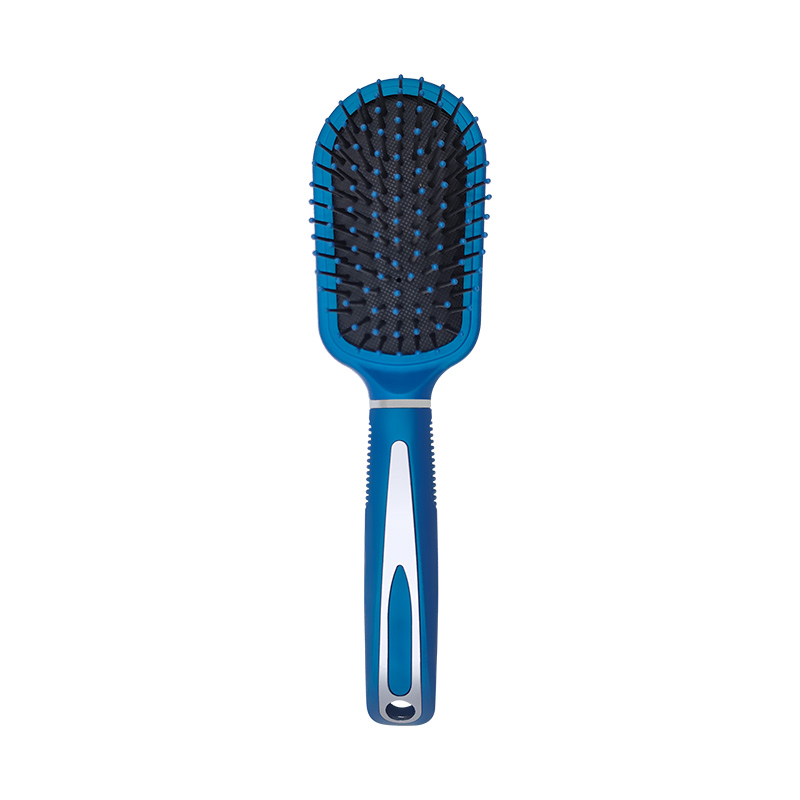
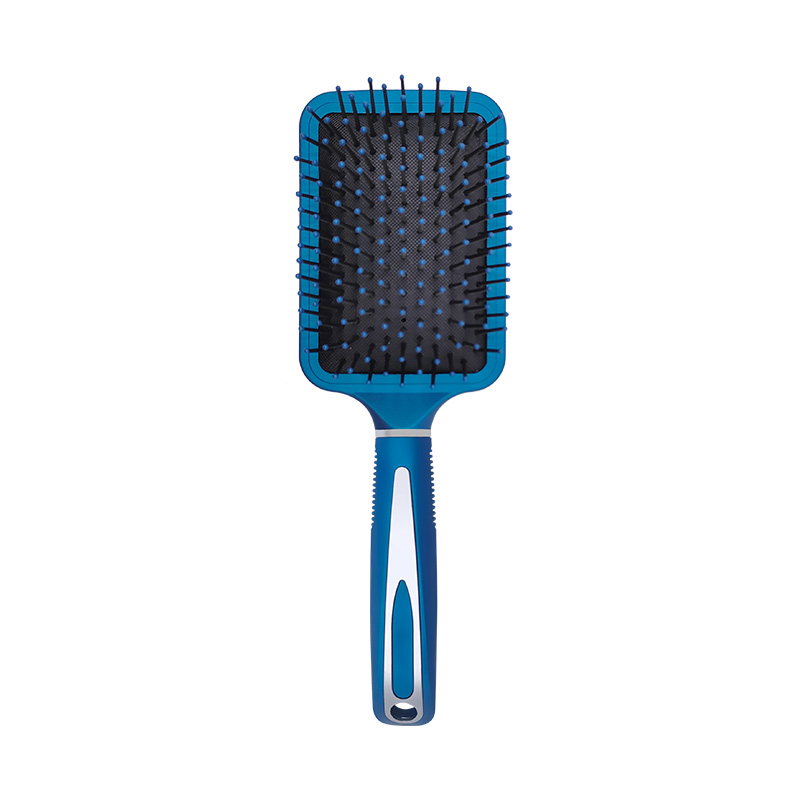
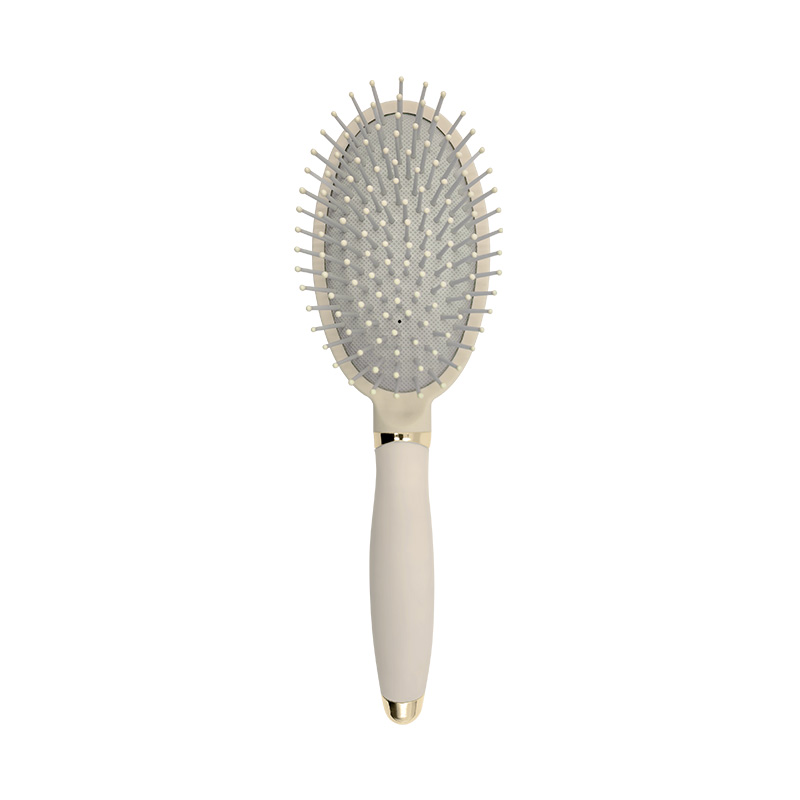
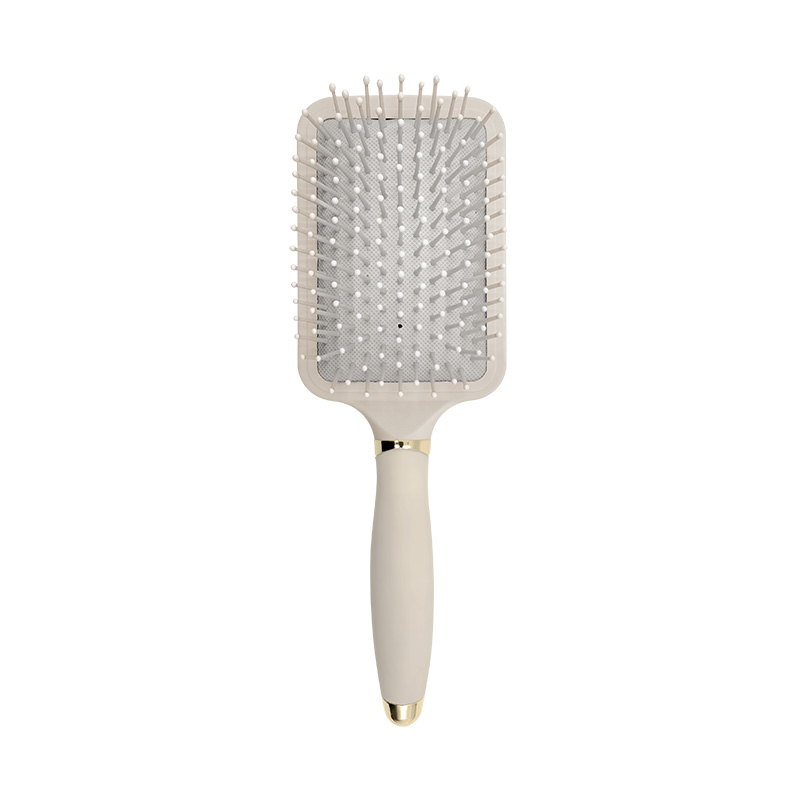
The paddle brush is the most recognizable hairbrush type — wide, flat, and rectangular or oval in shape, with a cushioned base and a large bristle surface area. The cushioned pad absorbs pressure and flexes slightly with each stroke, reducing scalp irritation.
Best For
- Long, straight, or slightly wavy hair
- Detangling dry hair with minimal pulling
- Smoothing hair during a blowout on medium to long lengths
- Distributing natural scalp oils from root to tip
Bristle Options
Paddle brushes come with nylon, boar bristle, or mixed bristles. Nylon pins glide through tangles faster, while boar bristle paddle brushes add shine and smoothness by distributing sebum more evenly. Mixed-bristle paddle brushes offer a balance of detangling power and conditioning effect.
Avoid paddle brushes on very curly or coily hair — the large flat base disrupts curl pattern and creates frizz.
Round Brush: The Blowout Specialist
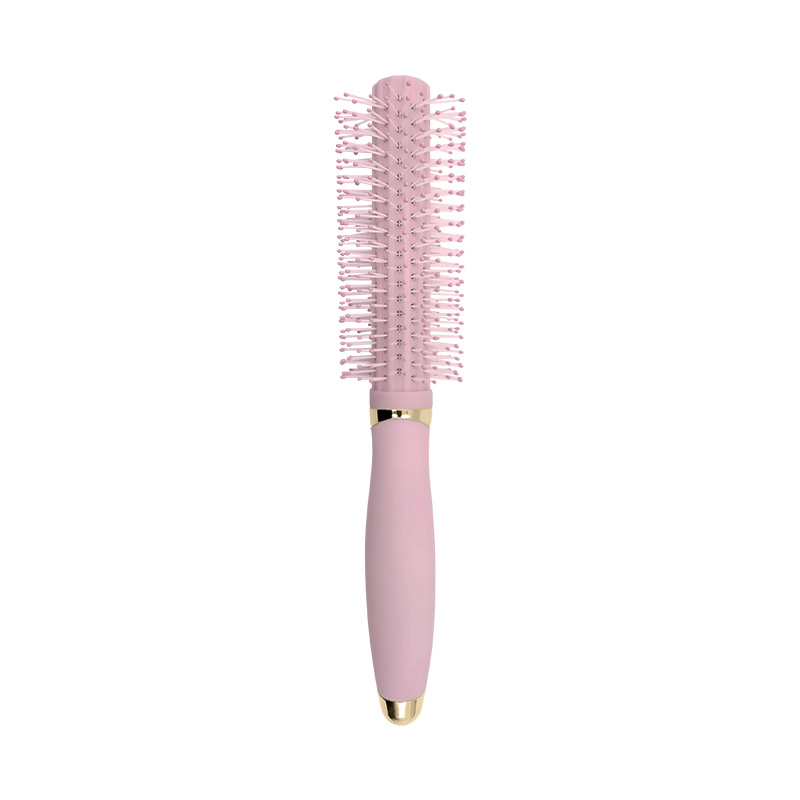
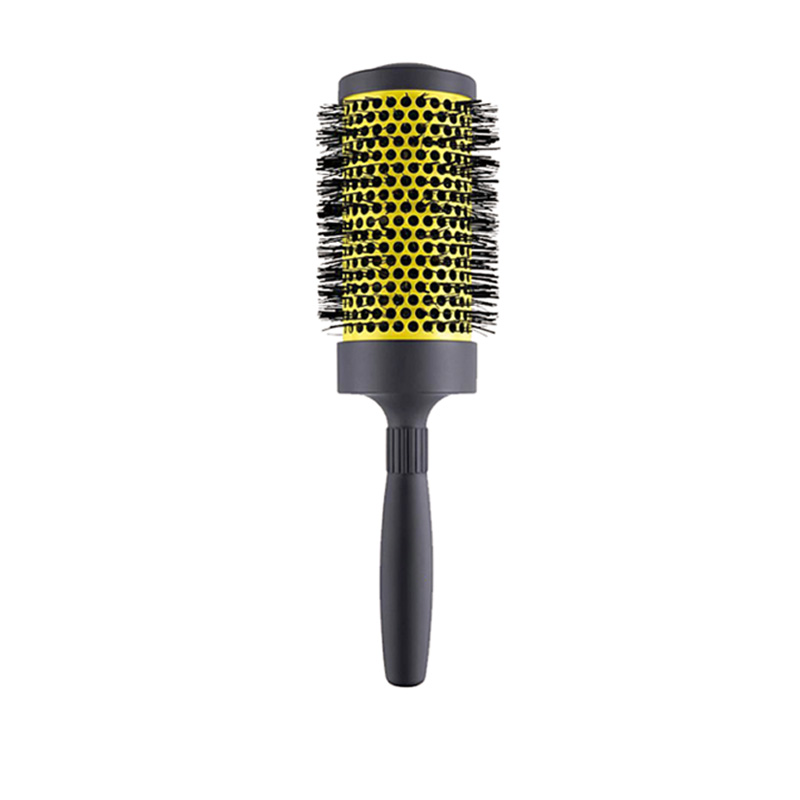
Round brushes are cylindrical, available in barrel diameters typically ranging from ¾ inch to 2.5 inches, and are the primary tool for creating volume, curl, and smoothness during a blowout. The size of the barrel determines the type of result.
| Barrel Diameter | Best Hair Length | Styling Result |
|---|---|---|
| ¾ – 1 inch | Short (pixie, bob) | Tight curls, defined flips |
| 1.25 – 1.5 inches | Medium (chin to shoulder) | Loose waves, body, smoothness |
| 1.75 – 2 inches | Long (collarbone and below) | Volume, gentle wave, sleekness |
| 2.25 – 2.5 inches | Very long | Maximum volume, straight blowout |
Barrel Material
Ceramic-coated barrels distribute heat evenly and reduce hot spots, making them the preferred choice for heat styling. Metal barrels heat up faster but can overheat and cause damage if left in the hair too long. Ceramic round brushes are recommended for color-treated or fine hair where heat protection is a priority.
Boar Bristle Brush: The Gold Standard for Shine and Scalp Health
Boar bristle brushes use natural bristles derived from the wild boar, whose structure closely mirrors the protein composition of human hair. This similarity allows the bristles to bond with the hair shaft and carry sebum from the scalp down the length of each strand — effectively conditioning hair naturally with every stroke.
Key Benefits
- Shine enhancement: Smooths the hair cuticle, reflecting light more uniformly. Studies on hair surface texture confirm that cuticle alignment is the primary factor in shine.
- Sebum distribution: Reduces the need for leave-in conditioners or hair oils for many users.
- Static reduction: Natural bristles carry less static charge than synthetic alternatives, reducing frizz caused by friction.
- Scalp stimulation: Gentle massaging action increases blood circulation to hair follicles.
Who Should Use One
Boar bristle brushes perform best on fine to medium, straight to wavy hair. They are not effective detanglers — the densely packed soft bristles can't penetrate thick tangles or coily textures. For thick, curly, or heavily tangled hair, a mixed boar-and-nylon bristle brush provides the conditioning benefits of boar bristle with enough grip to work through denser hair.
Detangling Brush: Engineered to Minimize Breakage
Detangling brushes — popularized by brands like Tangle Teezer and Wet Brush — feature flexible, closely spaced plastic teeth that bend on contact with a knot rather than pulling through it. This flex-and-release action reduces hair breakage by up to 75% compared to standard paddle brushes when used on wet hair, according to independent hair lab testing cited by trichology researchers.
When to Use a Detangling Brush
- On wet or damp hair — when hair is at its most elastic and vulnerable to breakage
- On curly, wavy, or coily textures that mat easily
- On color-treated or chemically processed hair with compromised cuticle integrity
- On children's hair, where comfortable detangling is a priority
Always detangle starting from the ends and working upward in sections — regardless of brush type — to prevent compounding knots at the root.
Vent Brush: The Speed-Drying Styling Tool
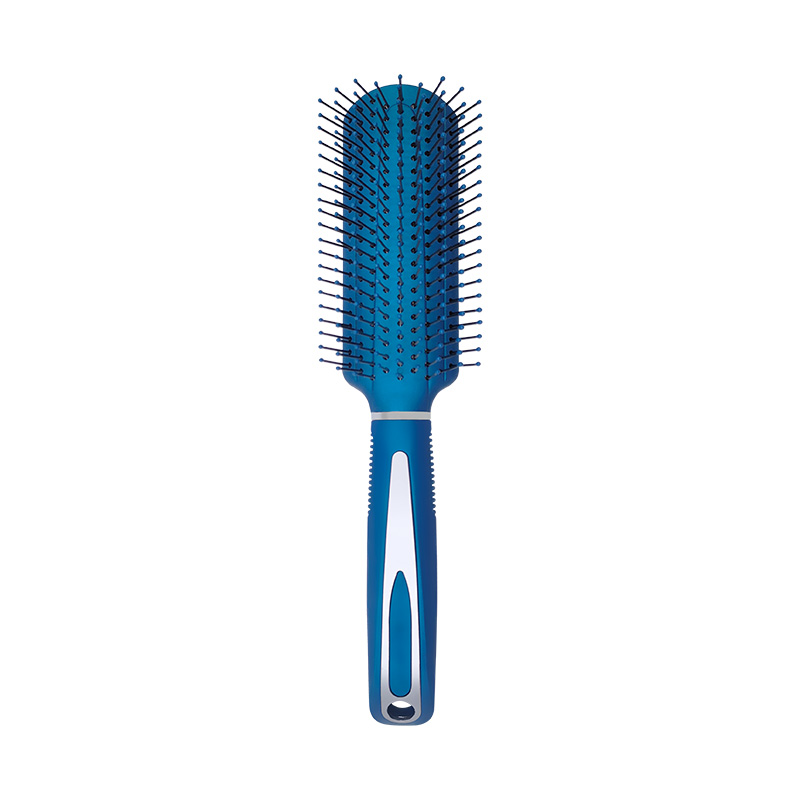
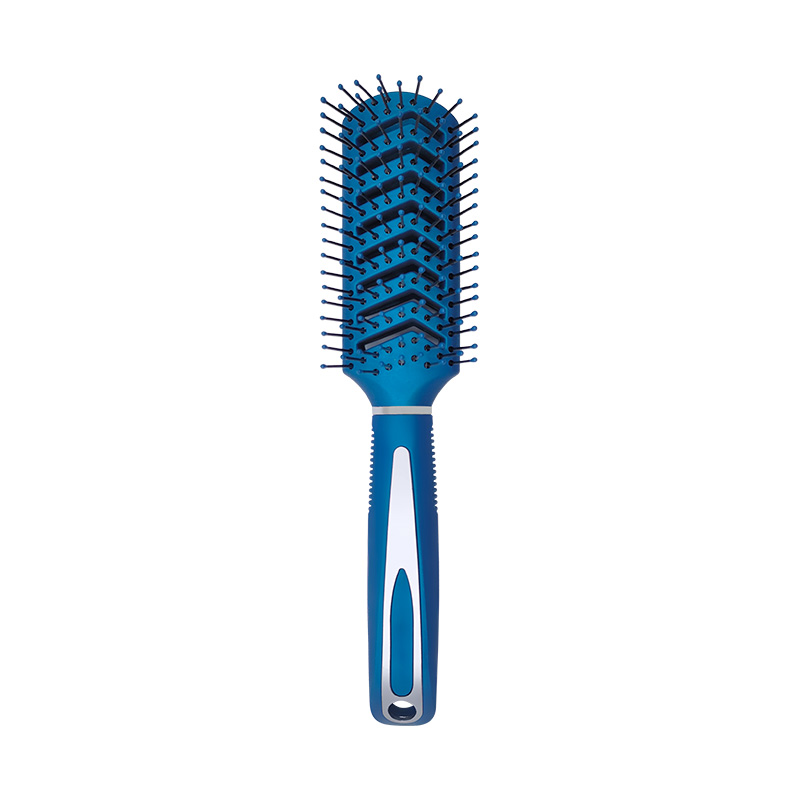
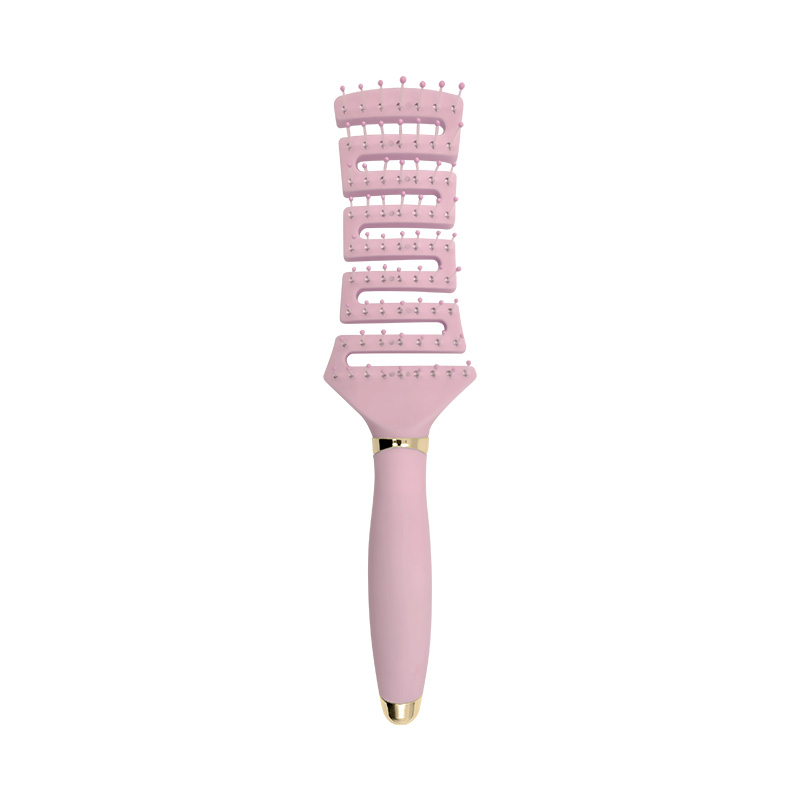
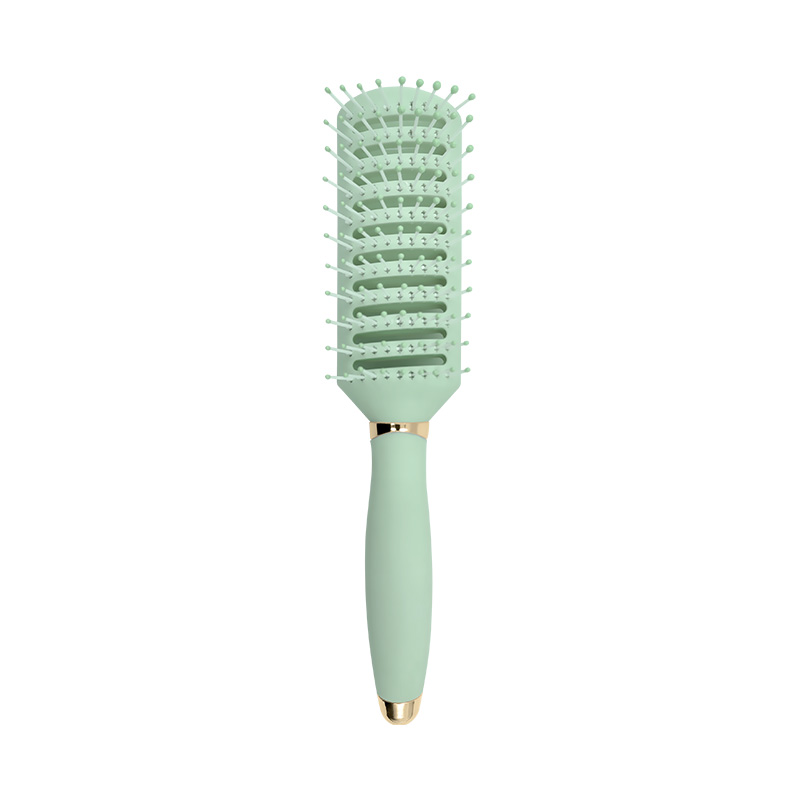
Vent brushes are defined by their open, skeleton-like base with large gaps (vents) between the bristle rows. These openings allow airflow from a hair dryer to pass directly through the brush, cutting drying time significantly compared to solid-base brushes.
They are not precision styling tools — they won't create a salon-quality blowout or defined curl. Instead, they are designed for fast, everyday drying with basic smoothing and volume at the root. Ideal for medium-length hair that needs a quick, natural-looking finish without a lot of styling effort.
- Best for: Normal to slightly wavy hair, quick morning styling routines
- Avoid for: Precise curl or wave formation, very fine hair that needs smoothing control
Teasing Brush: Adding Volume and Texture at the Root
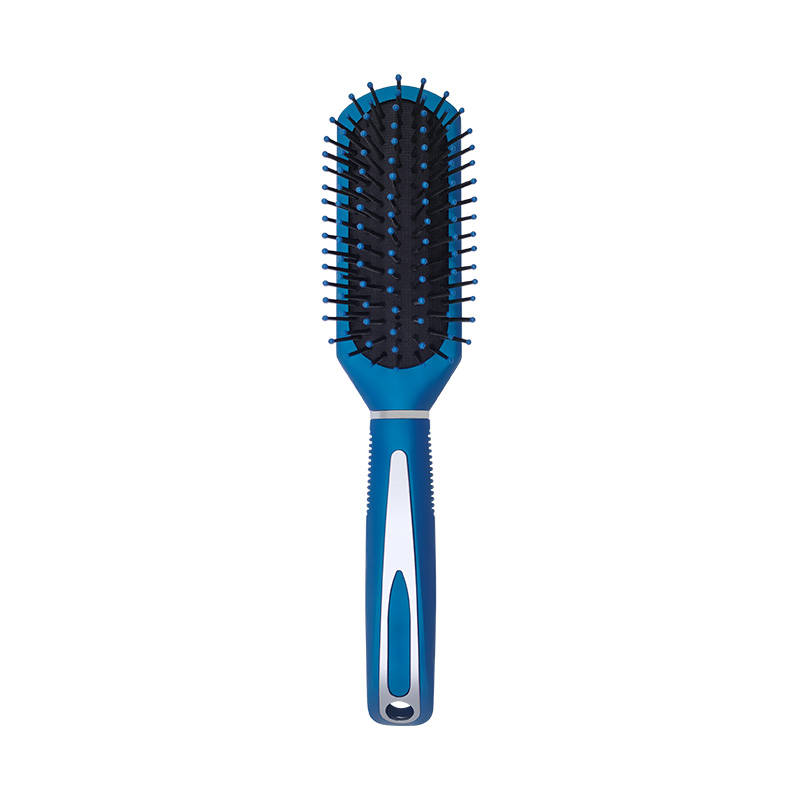
Also called a backcombing brush or rat-tail brush, the teasing brush has a narrow, tapered head with densely packed short bristles, usually accompanied by a pointed tail handle for sectioning. It works by intentionally roughing up the cuticle near the root to create friction and build volume through backcombing.
How to Use Without Damaging Hair
- Take a small section of dry hair and hold it taut above the head.
- Place the brush about 2 inches from the root and push gently downward toward the scalp with short strokes.
- Repeat 3–4 times, then smooth the top layer with a boar bristle brush for a polished finish.
- Apply a light-hold hairspray before smoothing to lock in the backcombed volume.
Teasing should be done sparingly — no more than 1–2 times per week — as it intentionally causes cuticle disruption that requires gentle combing to undo. Using a detangling brush to remove teasing afterward reduces breakage significantly.
Cushion Brush: Daily Use Comfort and Smoothing
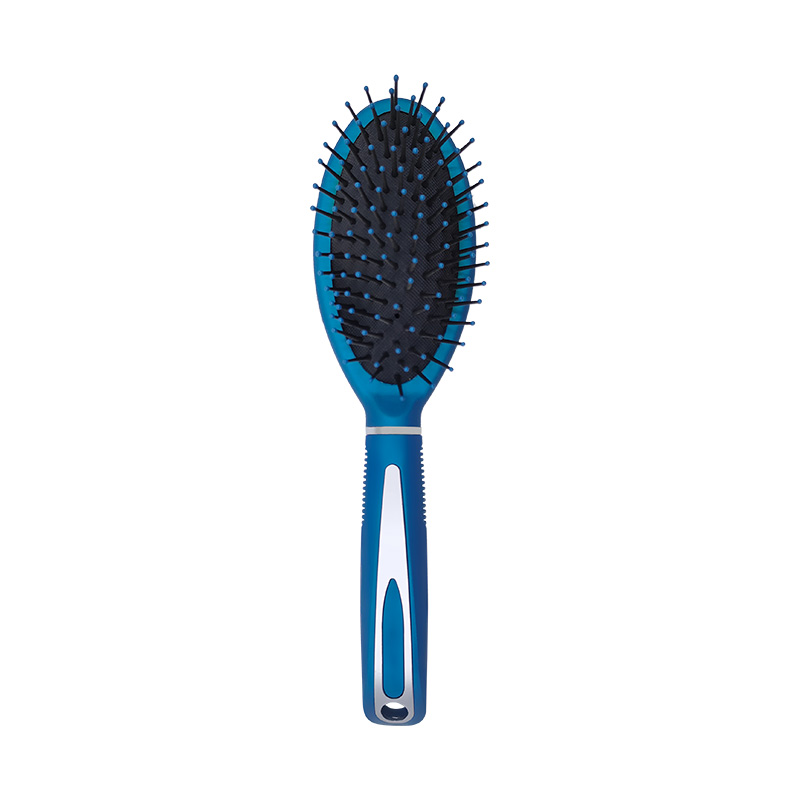
Cushion brushes feature a pneumatic (air-filled) rubber pad base that absorbs pressure and moves with the contour of the scalp. They are distinct from paddle brushes primarily in their rounded shape and the degree of cushion flexibility. The flex prevents the bristles from dragging harshly across the scalp during everyday brushing.
Cushion brushes are an excellent all-purpose choice for normal, straight to wavy hair used in a daily maintenance routine. They smooth without aggressively pulling and are gentle enough for regular use on fine hair. They are not ideal for wet detangling or precision blowouts.
Wide-Tooth Comb and Denman Brush: Curly and Coily Hair Essentials
For naturally curly (Type 3) and coily (Type 4) hair, most traditional brushes are more damaging than beneficial. Two tools dominate curl care:
Wide-Tooth Comb
With teeth spaced 5–8mm apart, wide-tooth combs glide through conditioner-saturated curls without disrupting the curl clump. They are the primary detangling tool recommended by trichologists for 3B–4C hair textures and are most effective when used in the shower with conditioner as slip.
Denman Brush
The Denman brush has rows of rubber-set nylon pins on a rubber pad and is a cult favorite in the curly hair community. Its rows define and clump curls during the styling process, encouraging consistent curl formation when used on wet, product-laden hair. Many users remove one or two rows of bristles to reduce drag and customize it for their specific curl pattern.
Hairbrush Bristle Types Compared: Nylon, Boar, and Mixed
Regardless of brush shape, bristle type is a defining performance variable. Here's how the three main options compare across key criteria:
| Bristle Type | Detangling Power | Shine Enhancement | Best Hair Type |
|---|---|---|---|
| Nylon / Synthetic | High | Low | Thick, coarse, or curly |
| Boar Bristle | Low | Very High | Fine to medium, straight to wavy |
| Mixed (Boar + Nylon) | Medium–High | Medium–High | Medium to thick, wavy to curly |
| Flexible Plastic (Detangler) | Very High (wet) | Low | All types, especially wet or tangled |
How to Match Your Hairbrush to Your Hair Type
Use this summary to quickly identify which brushes belong in your routine based on your hair's natural texture and your primary styling goals:
- Fine, straight hair: Boar bristle brush for daily use; small round brush for blowouts; cushion brush for gentle detangling.
- Medium, wavy hair: Mixed bristle paddle brush; medium round brush for blowouts; detangling brush for wet hair.
- Thick, straight or wavy hair: Nylon paddle brush; large-barrel round brush; vent brush for quick drying.
- Curly (Type 3) hair: Denman brush for curl definition; wide-tooth comb for wet detangling; detangling brush.
- Coily (Type 4) hair: Wide-tooth comb exclusively for detangling; fingers or a very wide pick for styling; avoid paddle and round brushes on dry hair.
- Color-treated or damaged hair: Detangling brush for wet use; boar bristle for dry smoothing; ceramic round brush only when blowdrying with heat protectant.
How Often to Clean Your Hairbrush — and Why It Matters
A dirty hairbrush redistributes old sebum, dead skin cells, product buildup, and bacteria back onto clean hair. Dermatologists recommend cleaning hairbrushes every 1–2 weeks for daily users. The process is straightforward:
- Remove hair from the bristles using a wide-tooth comb or your fingers after every use.
- Fill a bowl with warm water and a few drops of clarifying shampoo or mild soap.
- Swirl the brush bristles in the solution for 30–60 seconds. Do not submerge wood-handled or cushion-base brushes fully — water can crack wood and degrade the adhesive in cushion pads.
- Rinse under cool water, shake out excess, and allow to dry bristle-side down on a clean towel.
Replace hairbrushes every 6–12 months or when bristles become splayed, bent, or dislodged. Degraded bristles create uneven pressure and increase friction against the hair shaft — negating any performance advantage the brush once offered.