

 en
en 简体中文
简体中文 English


Content
- 1 What Builds Up in a Hairbrush and Why It Matters
- 2 How to Clean a Standard Hairbrush: Step-by-Step
- 3 How to Clean a Barrel Hairbrush
- 4 Cleaning Methods by Hairbrush Type
- 5 How to Clean a Boar Bristle Hairbrush Without Damage
- 6 How Often Should You Clean a Hairbrush
- 7 Tools That Make Cleaning a Hairbrush Easier
- 8 Signs It Is Time to Replace Your Hairbrush
To clean a hairbrush, remove all trapped hair first, then soak the bristles in warm water mixed with a small amount of shampoo for 3–5 minutes, scrub between the bristles with an old toothbrush, rinse thoroughly, and dry bristle-side down. The entire process takes under 10 minutes for most brush types. However, barrel hairbrushes, boar bristle brushes, wooden brushes, and cushion brushes each require slightly different handling to avoid water damage or bristle distortion. A dirty hairbrush actively redeposits oil, product buildup, and dead skin cells back onto clean hair — research suggests most people should be cleaning their hairbrush every 1–2 weeks, yet surveys indicate the majority clean theirs less than once a month.
What Builds Up in a Hairbrush and Why It Matters
Understanding what accumulates in a hairbrush explains why regular cleaning is a genuine hair health issue, not just an aesthetic one.
- Shed hair: The average person loses 50–100 hairs per day, and a significant portion are collected by the brush. Trapped hair mats around bristles, reducing the brush's detangling effectiveness and trapping other debris underneath.
- Sebum and scalp oil: Natural scalp oils coat the base of each bristle over time, creating a sticky film that attracts dust, lint, and dead skin cells with every use.
- Product residue: Dry shampoo, hairspray, mousse, and heat protectants accumulate in the bristle base and cushion pad. This residue is then transferred back onto freshly washed hair, leaving it looking dull and feeling coated.
- Dead skin cells: The scalp sheds skin continuously. These cells collect at the base of bristles as a grayish-white fuzz — a common source of the dusty buildup visible on unwashed brushes.
- Bacteria and yeast: The moist, organic-rich environment inside a dirty hairbrush can support microbial growth. Using such a brush on a healthy scalp introduces unnecessary microbial load, potentially contributing to scalp irritation.
How to Clean a Standard Hairbrush: Step-by-Step
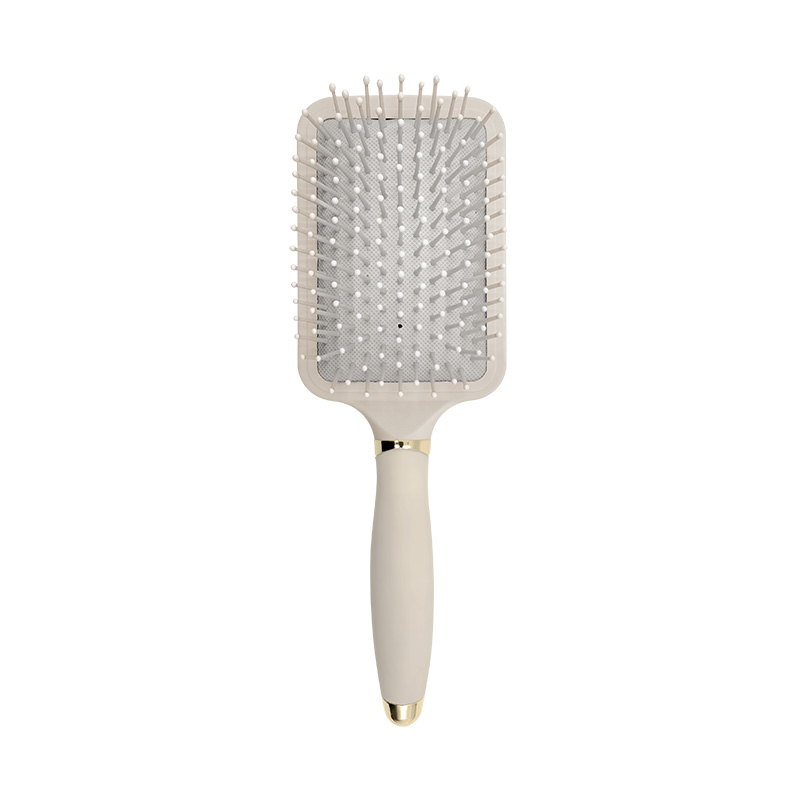
This method works for most plastic-base paddle brushes, flat brushes, and synthetic bristle brushes. For specialized brush types like barrel hairbrushes, boar bristle, or wooden brushes, see the sections below.
- Remove all hair from the brush. Use a rat-tail comb, a pencil, or a dedicated brush cleaning tool to lift and pull hair from the base of the bristles. Work in rows from one end of the brush to the other. For densely packed bristles, slip the comb tip under the hair mat and slide it toward the bristle tips. Remove all visible hair before adding water — wet hair mats even more tightly and becomes much harder to extract.
- Prepare a cleaning solution. Fill a bowl or sink with warm (not hot) water and add 1 teaspoon of clarifying or regular shampoo. You can also add 1 tablespoon of white vinegar to help dissolve mineral deposits and product buildup. Swirl to mix.
- Soak the bristles. Submerge only the bristle head of the brush in the solution. Keep the handle out of the water. Soak for 3–5 minutes to loosen oil and product residue. Do not soak wooden handles or cushion-pad brushes fully submerged — see specific notes below.
- Scrub between the bristles. Use an old toothbrush or nail brush to scrub the base of the bristles, the cushion pad, and between each bristle row. Work in short back-and-forth strokes. You will see oily, gray-brown residue releasing into the water — this is normal and expected.
- Rinse thoroughly. Hold the brush bristle-side down under running warm water, allowing water to flow through the bristles from base to tip. Continue until the water runs completely clear and no shampoo or soap residue remains.
- Shake out excess water. Give the brush several firm shakes over the sink to remove pooled water from the cushion pad and bristle base.
- Dry bristle-side down. Place the brush on a clean towel with bristles facing down. This allows water to drain away from the cushion pad and handle rather than pooling inside. Allow to air dry completely — typically 2–4 hours — before using. Never use a hairdryer to speed drying, as heat can warp plastic cushion pads and melt adhesive.
How to Clean a Barrel Hairbrush
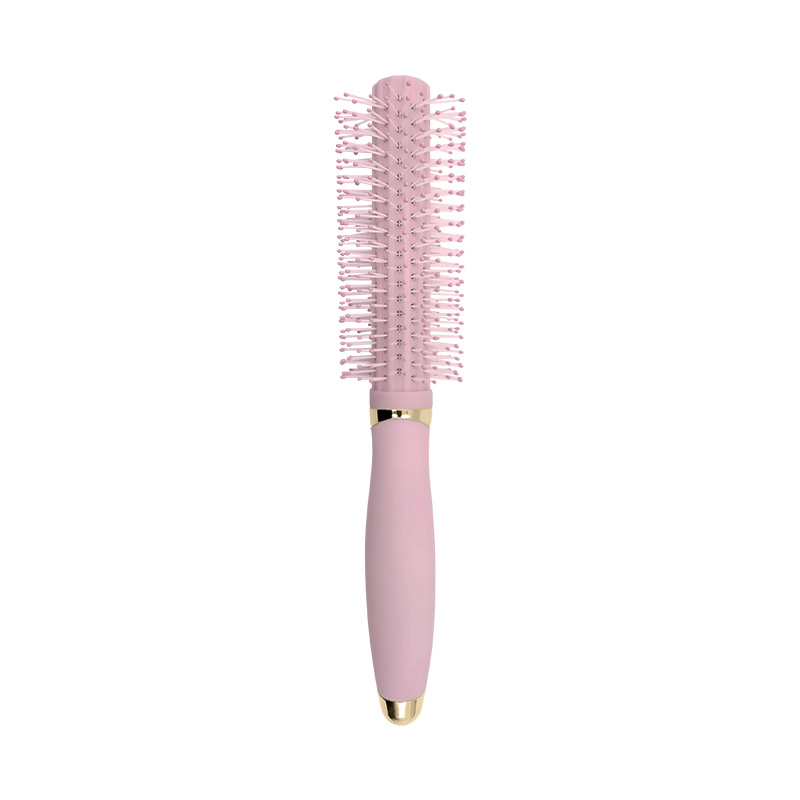
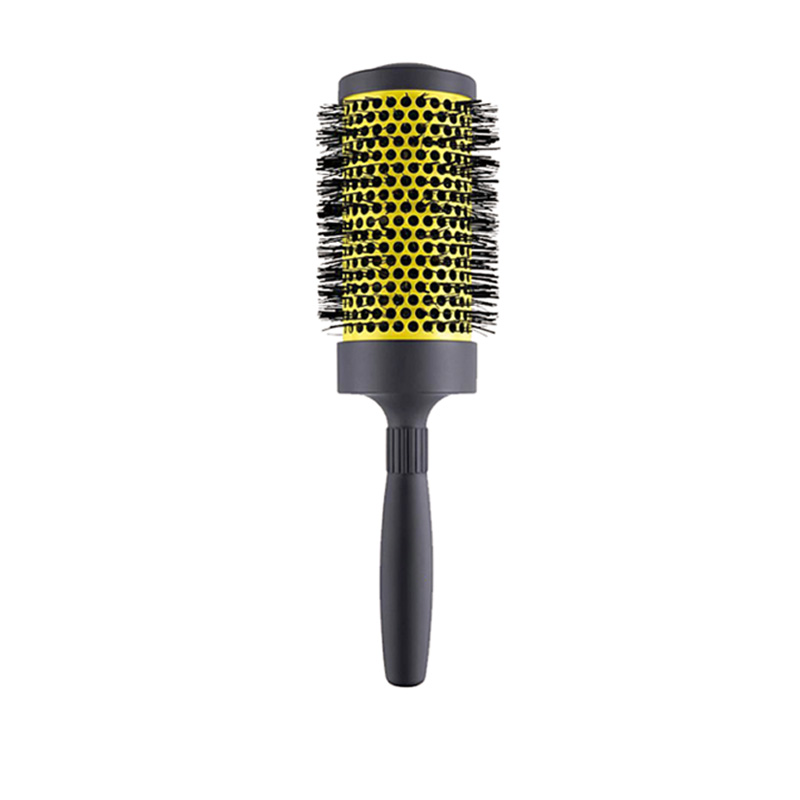
Barrel hairbrushes — the cylindrical, round brushes used for blow-drying volume, smoothing, or creating curls — are among the most difficult brush types to clean due to their shape. Hair wraps tightly around the entire circumference of the barrel, and bristles are densely packed at every angle, making both hair removal and rinsing more challenging than flat brushes.
Removing Hair from a Barrel Hairbrush
This step requires more patience on a barrel brush than any other type. Work methodically around the full circumference:
- Insert the tip of a rat-tail comb or seam ripper under the hair wrapped around the barrel, running it lengthwise along the barrel from one end to the other to cut through and loosen the wrapped hair.
- Once the wrapped hair is cut through, pull the loosened sections away from the barrel by hand. Rotate the brush and repeat on all sections around the circumference.
- Use scissors to carefully cut through any tightly wound hair close to the barrel surface if the comb cannot get under it. Cut parallel to the barrel axis, not toward the bristles, to avoid snipping bristle tips.
- Use a fine-tooth comb or toothpick to clear any remaining short hairs from between bristle rows at the barrel surface.
Washing the Barrel Hairbrush
Once hair is fully removed, the washing process for a barrel hairbrush follows the same principles as a standard brush but requires extra attention to full rinsing:
- Submerge the bristle section in warm soapy water and rotate the barrel slowly to ensure all sides of the bristles are soaked for 3–5 minutes.
- Use a toothbrush to scrub around the full circumference of the barrel, working along each bristle row. Pay extra attention to the area where bristles meet the barrel body, where product and oil buildup concentrates most heavily.
- Rinse by rotating the barrel slowly under running water, ensuring water reaches the inner bristle rows on all sides. Incomplete rinsing leaves shampoo residue at the barrel surface, which can transfer to hair during the next use.
- If your barrel hairbrush has a wooden barrel or a natural boar bristle surface, minimize soaking time to under 2 minutes and dry immediately after rinsing to prevent wood swelling or bristle distortion.
Drying a Barrel Hairbrush
Barrel brushes are harder to dry than flat brushes because water collects at the inner barrel surface. After shaking out excess water, stand the brush upright on its handle end on a dry towel so the barrel is elevated. This allows air circulation around the full circumference. Rotate the brush a quarter turn every hour to ensure even drying. Allow 4–6 hours for complete drying before use.
Cleaning Methods by Hairbrush Type
Different brush materials and constructions require tailored cleaning approaches. Using the wrong method damages bristles, cushion pads, or handles.
| Brush Type | Water Exposure | Cleaning Method | Key Caution |
|---|---|---|---|
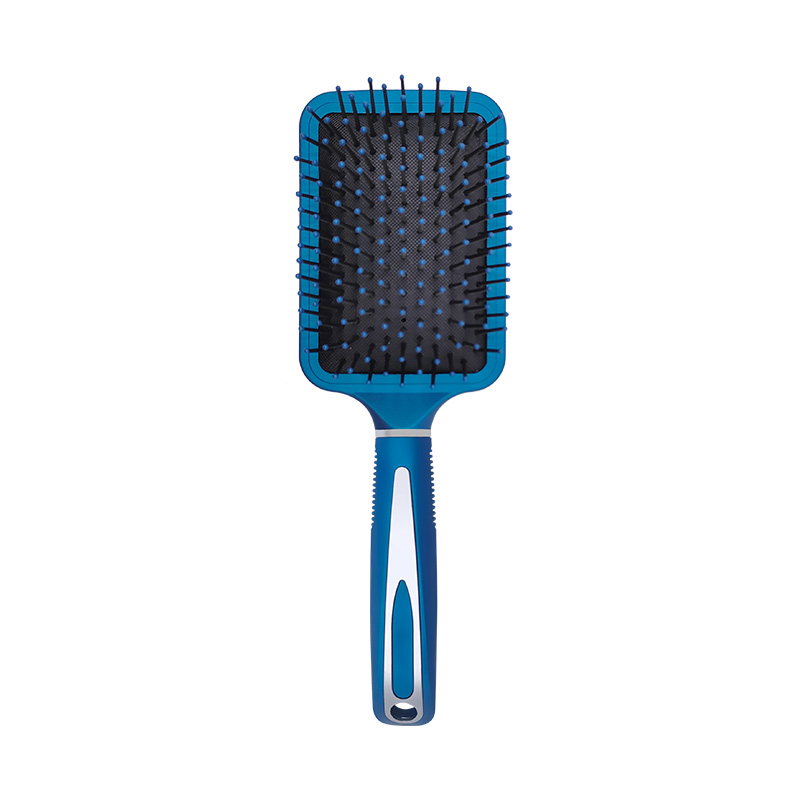
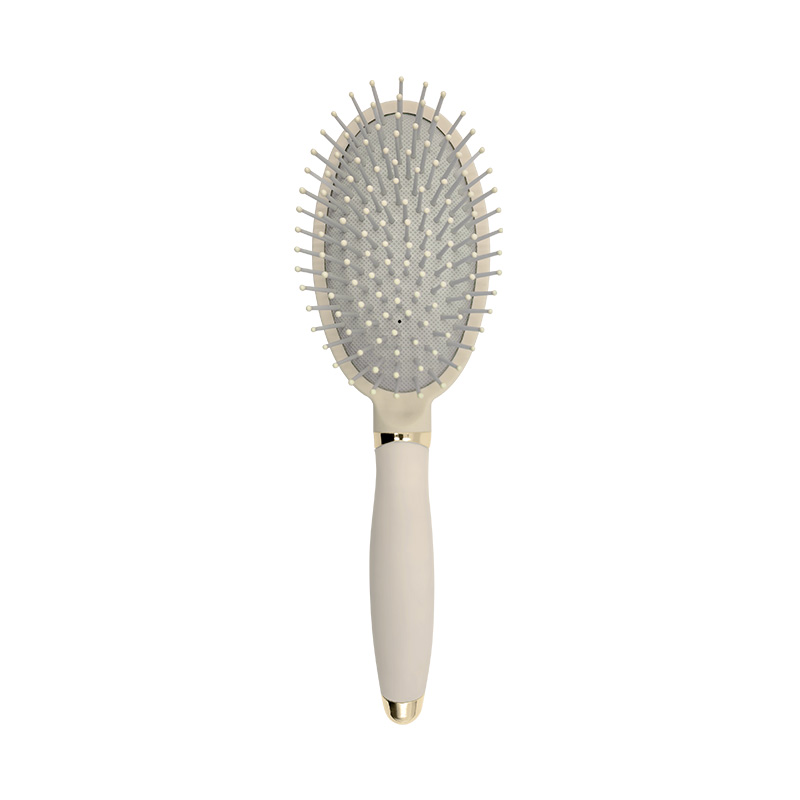
| Plastic paddle / flat brush | Full bristle soak, 3–5 min | Shampoo soak + toothbrush scrub | Avoid soaking cushion pad hole — traps water inside |
| Barrel hairbrush (plastic) | Full bristle soak, 3–5 min | Rotate in soapy water + toothbrush scrub | Dry upright; allow 4–6 hours to dry fully |
| Barrel hairbrush (wooden) | Minimal — bristles only, under 2 min | Damp toothbrush scrub; quick rinse | Prolonged soaking warps and splits wood barrel |
| Boar bristle brush | Bristle soak only, 2–3 min max | Gentle shampoo; soft toothbrush | Hot water or prolonged soaking softens and distorts natural bristles |
| Wooden handle brush | Bristles only — keep handle dry | Hold handle above water; soak bristles only | Water causes wood to crack, swell, and finish to peel |
| Cushion brush (air pad) | Bristles only — no pad submersion | Damp toothbrush at bristle base; spot clean | Water entering the cushion air hole pools inside and causes mold |
How to Clean a Boar Bristle Hairbrush Without Damage
Boar bristle brushes are particularly effective at distributing scalp oils along the hair shaft and smoothing the cuticle, but they are the most delicate brush type to clean. Natural bristles are sensitive to heat and prolonged moisture in a way synthetic bristles are not.
- Remove all hair with a fine-tooth comb. Work gently — boar bristles snap more easily than nylon bristles if you force the comb aggressively. Use slow, careful strokes from base to tip.
- Use cool or lukewarm water only. Hot water causes natural boar bristles to swell, soften, and lose their stiffness permanently. Fill a bowl with cool water and add a small amount of gentle shampoo.
- Dip only the bristle tips into the soapy water — do not submerge the full bristle length or the base. Gently swish the brush back and forth for 60–90 seconds.
- Use a soft toothbrush to clean the bristle base. Scrub gently at the pad surface and between bristle clusters where product residue accumulates most heavily.
- Rinse quickly under cool running water, bristle-side down. Minimize rinsing time to under 30 seconds — just enough to clear shampoo residue.
- Blot bristles with a dry towel immediately after rinsing. Press gently — do not rub. Then lay flat on a towel to air dry for 4–8 hours. Never stand a boar bristle brush bristle-side down while wet, as this concentrates moisture at the base.
How Often Should You Clean a Hairbrush
Cleaning frequency should be adjusted based on how often the brush is used and the amount of product applied to the hair. Here are practical guidelines:
| Use Pattern / Hair Type | Remove Hair | Full Wash |
|---|---|---|
| Daily use, no styling products | Every 2–3 days | Every 2 weeks |
| Daily use, regular styling products | Every 1–2 days | Every 1 week |
| Oily scalp or dry shampoo use | Daily | Every 1 week |
| Occasional use, minimal products | After each use | Every 3–4 weeks |
| Shared brush (household) | After each user | Every 1 week minimum |
As a practical minimum, remove accumulated hair after every 2–3 uses and do a full wash at least once per month regardless of use frequency. Leaving hair and buildup for longer than 4 weeks creates conditions where product residue hardens and becomes significantly harder to remove.
Tools That Make Cleaning a Hairbrush Easier
Having the right tools reduces cleaning time significantly, especially for barrel hairbrushes and densely packed bristle types.
- Rat-tail comb: The thin pointed end is ideal for threading under packed hair at the bristle base on both flat and barrel brushes. A standard rat-tail comb handles 95% of hair removal tasks more efficiently than fingers alone.
- Dedicated brush cleaning tool: A small rake-like tool with fine tines designed specifically to lift hair from brush bristles. Available for under $10, these pay for themselves in time saved within a few cleaning sessions.
- Old toothbrush: The most effective tool for scrubbing residue from the bristle base and cushion pad. Soft-bristle toothbrushes are preferable for boar bristle and delicate brushes; medium bristle for synthetic and plastic brushes.
- Small bowl or sink: A bowl allows you to control how much of the brush is submerged — critical for wooden handles and cushion-pad brushes where full submersion causes damage.
- Clarifying shampoo: More effective than regular shampoo at cutting through product buildup and sebum. Use it for monthly deep cleans, even if you use regular shampoo for weekly maintenance washes.
- White vinegar: Adding 1 tablespoon per cup of water to your cleaning solution dissolves mineral deposits from hard water and breaks down hairspray residue more effectively than shampoo alone.
Signs It Is Time to Replace Your Hairbrush
Even with perfect cleaning habits, hairbrushes do not last forever. Knowing when to replace rather than clean saves time and protects hair health.
- Bent, splayed, or missing bristles: Deformed bristles snag and break hair rather than smoothing it. On a barrel hairbrush, missing bristles create uneven tension during blow-drying, causing frizz and inconsistent results.
- Cushion pad that no longer springs back: A collapsed or hardened cushion pad loses its ability to flex with scalp contours, reducing gentle scalp stimulation and increasing friction.
- Persistent odor after cleaning: A brush that smells musty or rancid even after a thorough wash has likely developed microbial contamination in the cushion pad or at the barrel core that cannot be fully sanitized without replacing the brush.
- Cracked or split barrel on a barrel hairbrush: A cracked wooden or plastic barrel on a barrel hairbrush catches and breaks hair during styling. Replace the brush rather than attempting to repair it.
- General replacement guideline: Most hair stylists recommend replacing hairbrushes used daily every 6–12 months for synthetic bristle brushes and every 1–3 years for quality boar bristle or professional barrel hairbrushes with proper cleaning care.